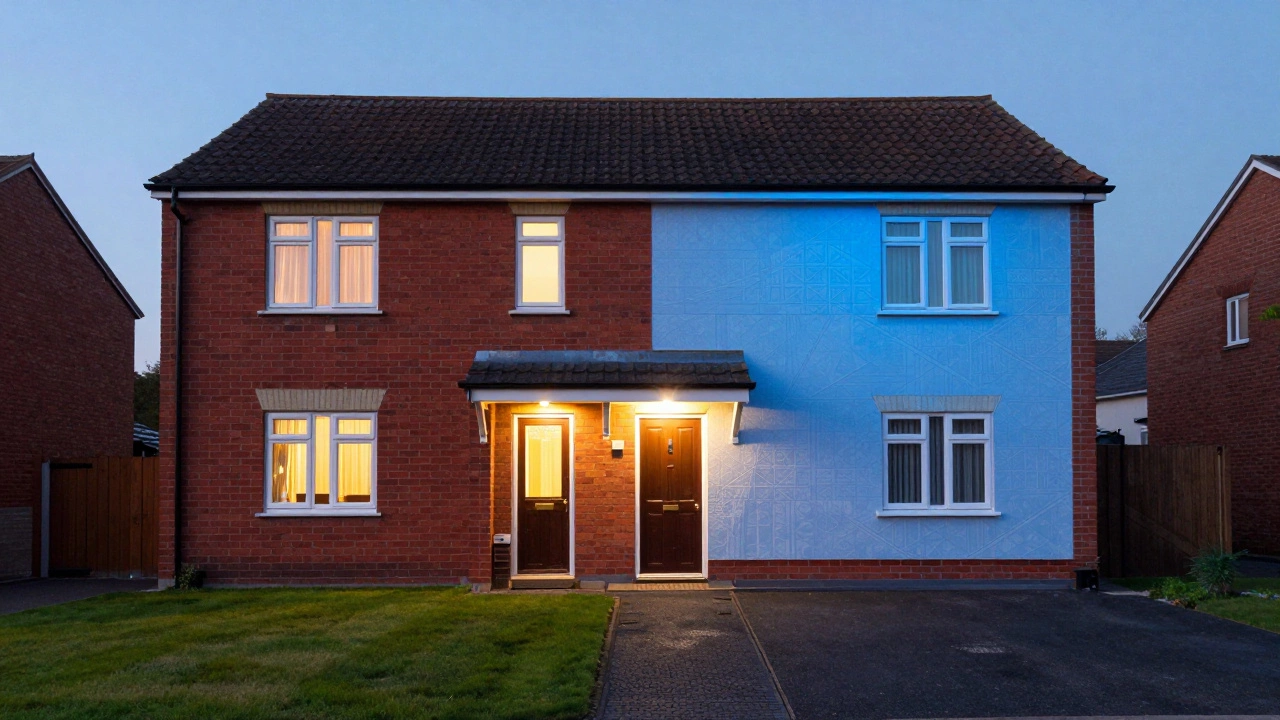
Shared Ownership Staircasing Simulator
Use this tool to understand how purchasing additional shares (staircasing) changes your financial commitment. This simulates trading monthly rent payments for increased mortgage liability.
You need funds to buy the difference. Estimate your new monthly mortgage repayment.
Can You Get Paid From Your Own Home?
You might have heard buzzwords about Shared Ownership is a housing model where you buy a percentage of a property and rent the remainder. It sounds like smart investing, and some people start wondering if they can tap into that asset like a savings account. The hard truth is, you don't receive a monthly salary from a residential asset simply because you own it. Unlike a Limited Partnership or a business LLC, a home isn't a revenue-generating machine designed to disburse cash to owners.
However, "paying yourself" is a metaphor many homeowners use when talking about extracting value or building wealth. If you hold a share in a shared ownership scheme, particularly under programs like the First Home Partner initiative in Auckland, your goal is equity growth, not a paycheck. You need to understand exactly how your ownership portion works before trying to monetize it illegally or inelegantly.
Understanding What You Actually Own
In most shared ownership setups, especially those aimed at first-time buyers, you are purchasing a percentage of the title-say 25% or 50%. The rest belongs to a Housing Association or Government Partner. You pay mortgage on your share and rent on the rest. That rent goes *out*, not in. You are essentially paying a third party for the privilege of occupying the space you haven't fully purchased yet.
The common misconception is thinking you can declare dividends or set up a payroll system based on that property equity. You cannot run your household budget like a corporate ledger. Your ownership gives you security and potential future wealth, but it does not create an income stream during the ownership period. If you rely on a steady paycheck, your job needs to support that, not your mortgage agreement.
For example, imagine you own a 50% stake in a unit in Ponsonby. Even if property values rise, that increase stays locked in the brickwork until you sell. This is the same principle that applies to property finance in general. Most banks view residential loans differently than commercial loans. They expect you to service the debt with external income (your salary), not by drawing money from the asset itself.
Ways to Access Your Equity Instead
Since you can't invoice the house, how do you get cash back? There are legitimate ways to realize the value you've put into your shared home. These methods involve moving equity rather than generating it daily.
- Selling Your Portion: If market conditions allow, you can sell your share. In many schemes, you have pre-emptive rights to buy the remaining stake, or you can sell your piece on the open market.
- Staircasing: This is the process of buying additional chunks of the property over time. It locks your capital into the asset but increases your overall net worth.
- Second Mortgages (Refinancing): In rare cases, lenders allow borrowing against the equity, though shared ownership agreements often restrict this. The Housing Association usually has a lien on the full property.
These options require you to navigate contracts carefully. In Auckland, regulations can shift yearly, affecting how much leverage you can pull. Checking with your lender is vital before assuming you have flexible access to funds.

Staircasing Explained
Staircasing is the practice of purchasing further shares of a property to become the full owner. This is the primary method to "realize" your investment without leaving the building. Instead of getting cash now, you reduce your rent obligation permanently. Every time you climb a rung of the staircase, you convert a rental expense into an owned asset.
This is critical for long-term planning. If inflation rises and interest rates go up, reducing your rent bill (which covers the other owner's costs) saves you money each month. Over 20 years, this saving compounds significantly. It is a form of paying yourself through cost reduction rather than direct deposit.
| Stage | Ownership % | Rent Payment | Mortgage Liability |
|---|---|---|---|
| Initial Purchase | 50% | High (on 50%) | Low (on 50%) |
| Mid-Term Staircase | 75% | Medium (on 25%) | Medium (on 75%) |
| Full Ownership | 100% | None | High (on 100%) |
While this looks attractive, remember that you still need the cash to buy the extra shares. You aren't receiving income; you are converting liquid cash into illiquid real estate. Plan accordingly.
Tax and Income Considerations
If you try to treat your home as an income source, the Inland Revenue Department (IRD) in New Zealand might not agree. Residential homes held for personal occupation generally do not qualify for tax deductions on maintenance expenses unless you are actively renting them out.
In a shared ownership deal, strict rules apply. Often, you are prohibited from subletting the entire property. Some schemes allow you to rent out spare bedrooms (Rooming House style), but this requires explicit consent from the housing partner. If you do this, the income becomes taxable. However, mixing business activities with personal shelter creates complexity. You need to separate books clearly to avoid audit flags.
Also, consider the Brightline Test rules. As of 2026, these rules determine if you owe tax on gains when you sell. If you bought with intent to flip, or if you held the property for less than the designated threshold, profits from your share sale might be taxable income. This is where professional advice from an accountant specializing in property law becomes necessary.

Navigating Co-Ownership Agreements
Sometimes, "sharing" refers to private arrangements between friends or family, not government-backed schemes. In this case, a legal co-ownership contract dictates how finances work. Here, "paying yourself" makes more sense if structured correctly.
- Joint Tenancy: Equal ownership, survivorship applies. Harder to value contributions separately.
- Tenants in Common: Distinct percentages. Easier to divide assets upon sale.
- Kāiwhakarite / Trusts: Setting up a trust allows for distribution of benefits, but again, usually on exit/sale events.
Even in these setups, the property generates value through appreciation, not labor. You cannot claim a wage for mowing the lawn or fixing the roof. Any work done is usually considered a contribution toward equity maintenance unless specified in a side agreement.
Avoiding Financial Pitfalls
Trying to force a residential asset to act like a business often leads to debt spirals. Many sellers pitch financing options that seem easy but trap you in high-interest revolving credit tied to your home.
Avoid refinancing your shared share at punitive rates just to boost short-term lifestyle spending. The cost of borrowing against your home share might exceed the value generated by the asset, especially if you're already paying rent to the partner organization.
Keep your financial goals aligned with the product. Shared ownership is a bridge to full homeownership, not a retirement income stream. Treat it as such to protect your long-term stability in the Auckland market.
Can I withdraw equity from a shared ownership home regularly?
No, regular withdrawals like a salary are not allowed. You can typically only access capital upon selling your share or staircasing (buying more equity).
Is rent received from roommates taxable?
Yes, any rental income generated from spare rooms is taxable income and must be declared to the IRD.
What happens if I want to sell my share?
Usually, you offer your share to the housing association first. If they decline, you may list it on the market, subject to valuation checks.
Does staircasing improve cash flow immediately?
No, it improves cash flow later by eliminating rent payments, but initially requires capital to buy the extra shares.
Can I take a loan against my shared home?
It depends on the specific contract. Lenders often view shared titles as higher risk, making second mortgages difficult to secure.