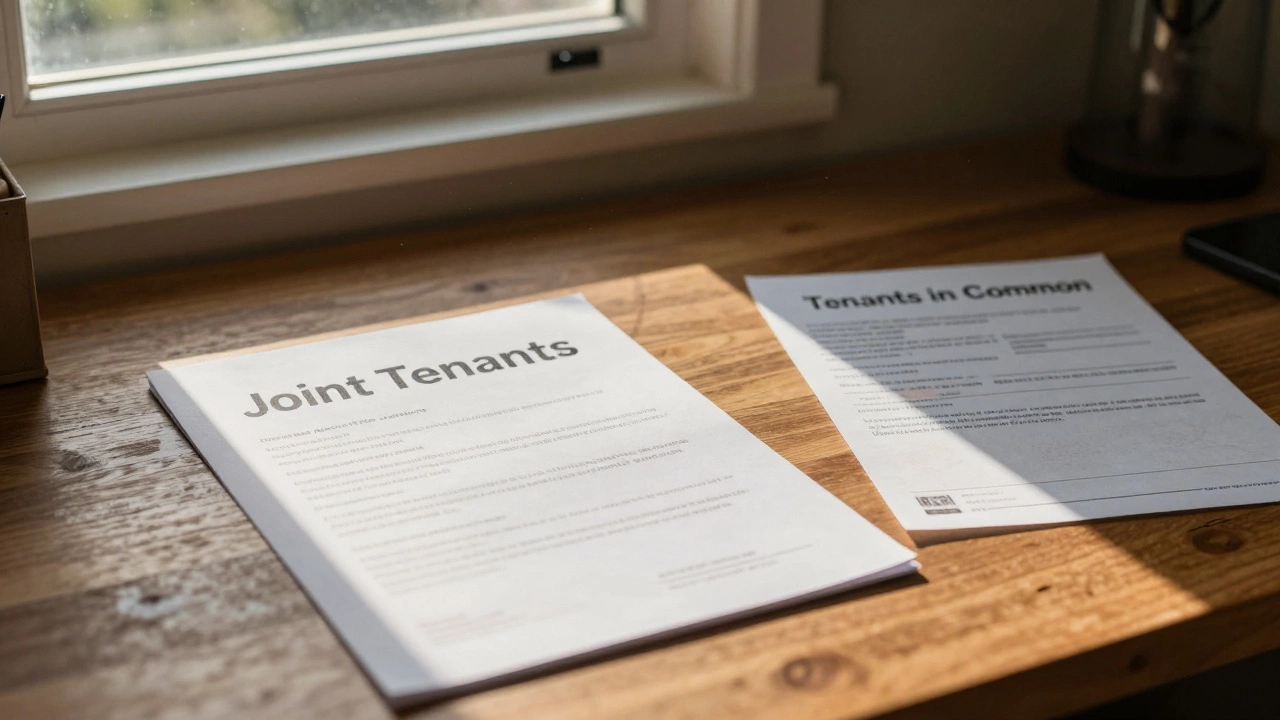
When two people own a home together - whether as spouses, partners, or even friends - and one of them passes away, what happens to their share of the property isn’t always obvious. Many assume the surviving owner automatically gets everything. But that’s not always true. It depends on how the ownership was set up from the start. In New Zealand, there are two main ways people hold property jointly: as joint tenants or as tenants in common. The difference between them changes everything when someone dies.
Joint Tenants: The Survivor Gets It All
If you and your partner bought your home as joint tenants, the moment one of you passes away, the entire property automatically becomes the sole property of the survivor. No will, no probate, no court process. It’s automatic. This is called the right of survivorship.
This setup is common among married couples and long-term partners. It’s simple, fast, and avoids legal delays. The surviving owner just needs to file a copy of the death certificate with Land Information New Zealand (LINZ), along with a form called a Transmission Application. Once processed, the title updates in their name alone. No fees beyond the standard LINZ processing cost - usually under $100.
But here’s the catch: you can’t leave your share to someone else in your will. Even if you wrote, “I want my half to go to my sister,” it doesn’t matter. The right of survivorship overrides your will. That’s why some people accidentally cut out family members they intended to benefit.
Tenants in Common: Your Share Goes to Your Heirs
Now, if you own the property as tenants in common, each person holds a specific share - often 50/50, but not always. One person might own 70%, the other 30%. When one dies, their share doesn’t automatically go to the other owner. Instead, it becomes part of their estate.
This means their share is distributed according to their will - or if they didn’t have one, according to New Zealand’s intestacy rules. That share could go to a child, a sibling, a charity, or even a former partner. The surviving co-owner doesn’t get it unless they’re named as a beneficiary.
This setup is more common among friends, family members who aren’t couples, or investors buying together. It gives each person control over who inherits their portion. But it also adds complexity. The estate must go through probate. The executor handles the transfer, and the surviving owner may need to buy out the deceased’s share or agree to keep the property as co-owned with the new heir.
How Do You Know Which One You Are?
Most people don’t know whether they’re joint tenants or tenants in common. The answer is on the property title. If you’re unsure, check your Title Certificate from LINZ. It’ll say either “joint tenants” or “tenants in common.”
If it doesn’t say anything - and you bought the property after 2000 - you’re likely joint tenants by default. Before 2000, it was common to assume tenants in common unless stated otherwise. So if you’ve held the property since the 90s and never changed it, double-check.
Changing from one to the other is easy. If you’re joint tenants and want to leave your share to someone else, you can sever the joint tenancy. This turns it into tenants in common. You need to file a form with LINZ - it’s not expensive, and you don’t need a lawyer. But once you do, you can’t go back without the other owner’s consent.

What If There’s a Mortgage?
Joint ownership doesn’t change how loans work. If the property has a mortgage, the surviving owner still owes the full amount. Banks don’t forgive debt because someone died. But they usually don’t demand immediate repayment - as long as payments continue.
If the deceased’s share goes to someone else (like a child), that person becomes a co-owner of the property - and also shares responsibility for the mortgage. The bank might ask them to sign a new loan agreement. If they can’t qualify, the surviving owner might have to refinance alone or sell the property.
Some lenders offer life insurance tied to the mortgage. It’s worth checking if you have it. If so, the payout can cover the outstanding balance, leaving the property debt-free for the survivor.
What About Tax?
In New Zealand, there’s no inheritance tax. So the surviving owner doesn’t pay tax just because they inherited the property. But if the deceased’s share goes to someone outside the relationship - say, a sibling - and that person later sells the property, capital gains tax might apply.
That’s because only the primary residence is exempt from capital gains. If the inherited share was never the heir’s main home, and they sell it later, they could owe tax on the profit. This is rare, but it happens. The key is knowing whether the property was the deceased’s main home and whether the heir plans to live there.
What If You Don’t Have a Will?
If you’re tenants in common and die without a will, your share goes to your next of kin under the Administration Act 1969. The order is usually: spouse or partner first, then children, then parents, then siblings. If you’re not married and have no kids, your share could go to your brother or sister - even if you never told them about the property.
This is why even simple estates benefit from a will. A one-page document can prevent years of family conflict. You don’t need a lawyer to write one. Online will services in New Zealand, like Legacy or LawHawk, can help you create a legally valid will for under $100.
Common Mistakes People Make
- Assuming joint ownership means automatic inheritance - even if you’re tenants in common.
- Not updating your title after separation or divorce - you might still be tied to an ex-partner.
- Leaving property to someone in your will without checking your ownership type - if you’re joint tenants, your will doesn’t matter.
- Failing to tell your family where the title documents are - delays can last months.
What Should You Do Now?
Take five minutes today. Find your property title. Check if you’re joint tenants or tenants in common. If you’re unsure, call LINZ or ask your solicitor. Then ask yourself: if I died tomorrow, who should get my share? Is that who it’ll go to now?
If the answer doesn’t match your wishes, change it. Sever the joint tenancy. Write a will. Talk to your co-owner. Don’t wait until it’s too late. A simple paperwork fix now can save your family from a legal mess later.
Real-Life Example
Two sisters bought a house in Auckland in 2018 as tenants in common - 60% and 40%. One sister passed away in 2024. She left her 40% share to her daughter. The surviving sister didn’t want to sell, but didn’t have the cash to buy out the daughter. They ended up renting out the property together for two years while the daughter finished university. The arrangement worked, but only because they’d planned ahead. Many families don’t.
Does the surviving owner automatically inherit the property if it’s jointly owned?
Only if you own the property as joint tenants. If you’re tenants in common, the deceased’s share goes to their estate - not automatically to the survivor. The ownership type determines what happens.
Can I change from joint tenants to tenants in common after buying the property?
Yes. You can sever the joint tenancy at any time by filing a Notice of Severance with Land Information New Zealand (LINZ). It costs under $100 and doesn’t require the other owner’s consent. Once done, you each own a specific share.
What happens if one owner dies without a will?
If you’re tenants in common, your share passes to your next of kin under New Zealand’s intestacy rules - spouse first, then children, then parents or siblings. If you’re joint tenants, the survivor still gets everything regardless of will or family.
Do I need a lawyer to handle a death transfer on a jointly owned property?
Not always. If you’re joint tenants, you only need to submit a death certificate and transmission form to LINZ. If you’re tenants in common, you may need an executor to handle probate - and a lawyer can help, but it’s not required. Many people use online services or do it themselves.
Can a mortgage affect how shares are transferred after death?
Yes. The mortgage remains active. The surviving owner is still responsible for payments. If the deceased’s share goes to someone else, the bank may require them to qualify for the loan. If they can’t, the survivor may need to refinance or sell.