Shared Ownership Calculator
Buying a home feels impossible for many people today. Prices are high, deposits are huge, and salaries haven’t kept up. But there’s another way - a share house. It’s not renting. It’s not buying alone. It’s buying part of a home with someone else, and living in it. If you’ve ever heard the term "shared ownership" and wondered what it really means, this is how it works - no jargon, no fluff.
What Exactly Is a Share House?
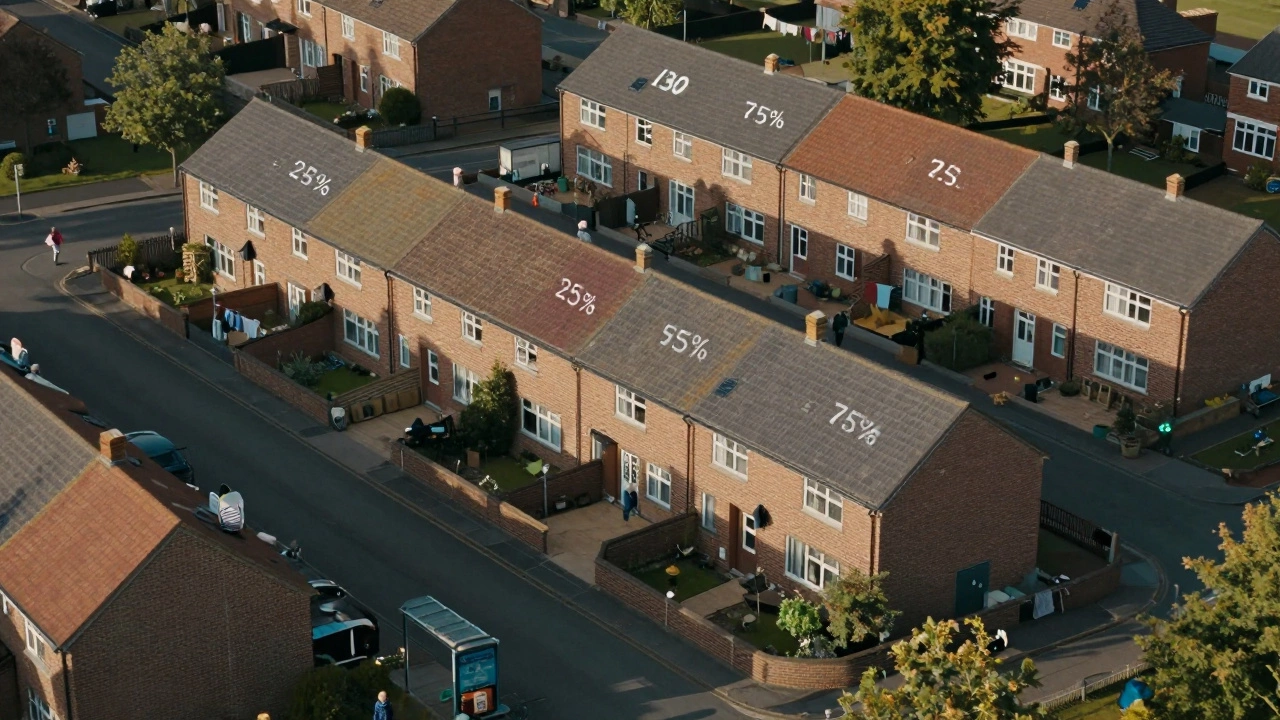
A share house, also called shared ownership, lets you buy a portion of a home - usually between 25% and 75% - while paying rent on the rest. The part you don’t own is still owned by a housing association or a public body like a local council. You live in the whole house like you own it all. But legally, you only own the share you paid for.This isn’t a rental agreement. You’re a part-owner. That means you can make changes to your space, decorate however you like, and even sell your share later. You’re not just a tenant. You’re building equity.
For example, if a home is worth $300,000 and you buy a 50% share, you pay $150,000 upfront. You don’t need to come up with the full $300,000. That’s the whole point. The housing association owns the other half. You pay rent on that half - usually around 2.75% of its value per year. So in this case, you’d pay about $687 a year in rent, or roughly $57 a month.
How Do You Buy Your Share?
You don’t need to save up the full price. Most people use a mortgage to buy their share. But here’s the twist: lenders who offer shared ownership mortgages don’t care about the full property value. They only look at the portion you’re buying.Let’s say you want a $300,000 home and you can afford a 10% deposit on a 40% share. That means:
- You’re buying $120,000 worth of the home (40% of $300,000)
- Your deposit is 10% of $120,000 = $12,000
- Your mortgage is $108,000
You’d need to show you can afford that $108,000 mortgage plus the monthly rent on the remaining 60%. That rent is calculated on the housing association’s share - not the whole house. So if you’re renting 60%, and the rent is 2.75% per year, you pay about $495 a year, or $41 a month.
That’s not a typo. You’re paying roughly $1,000 a month total - mortgage + rent - to live in a $300,000 home. Compare that to renting the same place, which could cost $1,800 or more.
Who Can Apply?
Shared ownership isn’t for everyone. It’s designed for people who can’t afford to buy outright - but who can afford to pay a mortgage and a small rent. Most programs require:- You’re a first-time buyer, or you’ve sold your last home
- Your household income is under $80,000 (in most areas - higher in cities like London)
- You don’t own any other property
- You have a stable income and good credit
Some programs also prioritize key workers - teachers, nurses, police officers - because they often earn too much for social housing but too little for the open market.
You can’t use shared ownership to buy a second home. It’s not an investment scheme. It’s a path into homeownership for people who need a hand up.
Can You Buy More Later?
Yes. This is called "staircasing." You can buy more shares over time - usually in 10% increments - until you own 100%. There’s no deadline. You can do it in year three, year ten, or never. It’s your choice.When you buy more, you get a new valuation of the home. If prices went up, you pay more. If they dropped, you pay less. You’re not locked into the original price. That’s fair. But it also means your mortgage might go up when you staircase.
For example: You bought 40% of a $300,000 home. Three years later, it’s worth $340,000. You want to buy another 20%. You pay 20% of $340,000 = $68,000. You now own 60%. You’ll need a new mortgage for that amount.
Most people staircase once or twice. A few go all the way to 100%. But even if you never buy more, you’re still building equity in the share you own. And you’re not throwing money away on rent - you’re paying into your own asset.
What About Maintenance and Bills?
You’re responsible for everything inside your home: repairs, utilities, insurance, council tax. The housing association handles the building’s structure - roof, walls, foundations. But if your boiler breaks, you fix it. If the kitchen sink leaks, you pay for it.Some shared ownership homes have service charges - small monthly fees to cover things like communal gardens, lifts, or security. These are clearly explained before you sign anything.
You’ll need buildings insurance. But since you don’t own the whole property, you only insure your share. Your lender will require this. It’s not expensive - usually under $200 a year.
What Happens If You Want to Move?
You can sell your share anytime. But you can’t just list it on Zillow. The housing association has the right to find a buyer first - usually for 8 to 12 weeks. They’ll market it to other eligible shared ownership buyers. If no one buys, you can then sell on the open market.You keep all the profit from your share. If you bought 30% for $90,000 and now it’s worth $135,000, you walk away with $45,000. No one takes a cut. That’s your equity.
There are fees: a valuation fee, legal fees, and sometimes an administration fee from the housing association. But they’re predictable - usually under $1,500 total.
Is It Worth It?
Let’s compare two people: Maria and Jake.Maria rents a one-bedroom apartment for $1,700 a month. She’s 28. She’s saved $15,000. She can’t afford a 20% deposit on a $300,000 home.
Jake buys a 50% share in the same $300,000 home. He puts down $15,000 as a deposit. His mortgage is $135,000 at 5.5% interest. That’s $810 a month. His rent on the other half is $57 a month. Total: $867. He pays $833 less than Maria every month.
After five years, Jake owns $170,000 in equity. Maria owns nothing. She’s paid $102,000 in rent and still has $15,000 in savings.
That’s the power of shared ownership. It’s not magic. It’s math. You’re paying less than rent while building real wealth.
What Are the Downsides?
It’s not perfect. Here’s what you need to watch out for:- You can’t rent out your share. You have to live in it.
- Some homes have restrictions - no pets, no renovations without permission.
- Staircasing can get expensive if property values jump fast.
- You’re tied to the housing association. They control the resale process.
- If you fall behind on rent or mortgage, you risk losing your share.
Also, not all homes are available. Shared ownership properties are often new builds or refurbished social housing. You won’t find them in the most desirable neighborhoods. But they’re in good locations - near transport, schools, shops.
Where Do You Start?
Step 1: Check if you qualify. Visit your local housing association’s website. Most have online eligibility checkers. Step 2: Get a mortgage pre-approval. Talk to a broker who knows shared ownership. Not all lenders offer it. Step 3: Look at available homes. You can search through government portals like HomeBuy or local housing association listings. Step 4: Get a solicitor. They’ll explain the legal documents - the lease, the shared ownership agreement, the staircasing rules. Step 5: Apply. Once you find a home, you’ll need to complete an application. There’s often a waiting list.It takes time. But it’s one of the few real paths into homeownership left for working people.
Can you ever own 100% of a share house?
Yes. You can buy additional shares over time through a process called staircasing. Most programs allow you to increase your ownership in increments - usually 10% at a time - until you own the entire property. Once you reach 100%, you no longer pay rent, and you own the home outright. But you’ll need to get a new valuation each time you buy more, and your mortgage may increase depending on current market prices.
Is shared ownership only for first-time buyers?
No. While many programs prioritize first-time buyers, you can also qualify if you’ve previously owned a home but can no longer afford to buy one outright. You must sell your current property before applying. The goal is to help people who are priced out of the market - whether they’re new to homeownership or returning after a life change like divorce or job loss.
Do you pay council tax in a share house?
Yes. You pay council tax just like any homeowner. It’s based on the value of the entire property, not your share. The local council doesn’t care how much of the home you own - you live there, so you pay the tax. It’s usually included in your monthly budget alongside your mortgage and rent.
Can you get a mortgage for a 10% share?
Technically, yes - but it’s rare. Most lenders require you to buy at least 25% of the property to qualify for a mortgage. A 10% share would mean borrowing too little to cover the costs of processing the loan. Lenders prefer shares of 25% or more because it reduces their risk. If you’re set on a smaller share, you may need to save more or look for special programs, which are limited.
What happens if the housing association goes out of business?
Housing associations are regulated by the government and rarely disappear. If one does, another approved provider usually takes over the management of the properties. Your ownership rights don’t change. You still own your share. You still pay rent on the rest. The new provider will contact you directly to update your agreements. Your mortgage and legal rights remain protected.