
NC Guarantee Grant Calculator
Check Your Eligibility
Determine if you qualify for the NC Guarantee Grant Program for first-time home buyers in New Zealand based on current rules (2024).
Enter your details above to check eligibility
If you're buying your first home in New Zealand, you've probably heard whispers about the NC Guarantee Grant. But what exactly is it? And more importantly-can you actually get it? This isn’t a vague government promise or a marketing gimmick. It’s a real, rules-based program designed to help first-time buyers break into the housing market without needing a 20% deposit. And yes, thousands of people have used it to buy their first home since it launched in 2023.
What the NC Guarantee Grant Actually Does
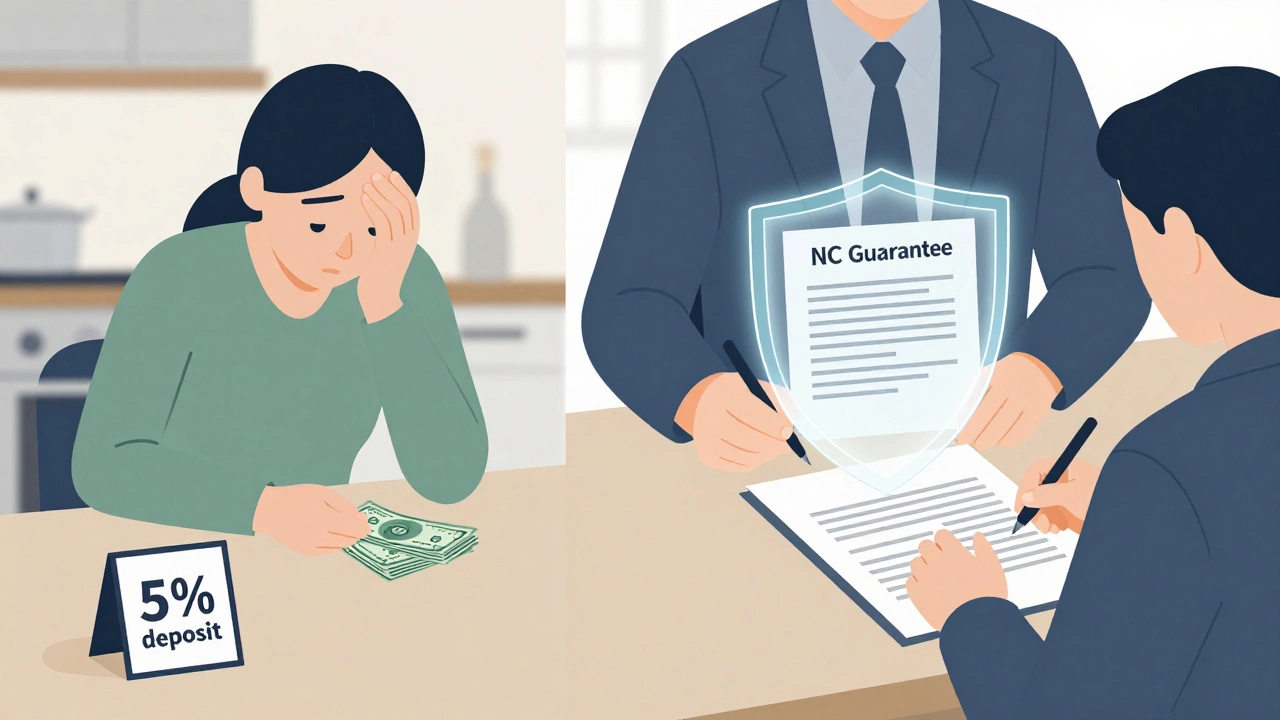
The NC Guarantee Grant is a government-backed financial tool that lets eligible first-time buyers secure a home loan with as little as 5% deposit. Normally, banks require 20% down to avoid mortgage insurance. But with the NC Guarantee, the government steps in to cover the risk on the remaining 15%. That means lenders are more willing to approve your loan, even if your savings aren’t huge.
It’s not a direct cash payment into your bank account. You don’t get $10,000 handed to you. Instead, it’s a guarantee that reduces the lender’s risk. Think of it like a co-signer who never shows up to dinner but still pays the bill if you can’t.
The program is administered by Housing New Zealand (Kāinga Ora) and works through approved lenders like ANZ, BNZ, and Kiwibank. You apply for your mortgage as normal-but you flag that you want to use the NC Guarantee. The lender then checks your eligibility and submits the request on your behalf.
Who Qualifies for the NC Guarantee Grant
Not everyone gets in. There are clear rules. To qualify, you must:
- Be a New Zealand citizen or permanent resident
- Never have owned a home in New Zealand or overseas
- Have a household income under $120,000 (or $180,000 if you’re buying in Auckland or Wellington)
- Buy a home that costs no more than $750,000 (or $900,000 in Auckland and Wellington)
- Use the home as your primary residence-you can’t buy it as an investment
- Have a deposit of at least 5% of the purchase price
These limits are adjusted every year based on median house prices. In 2025, the Auckland cap rose from $850,000 to $900,000 because prices kept climbing. If you’re buying in Tauranga, Napier, or Christchurch, the cap is still $750,000.
There’s also a credit score requirement. You don’t need a perfect 800 score, but you need to show responsible borrowing history. Late payments on credit cards or student loans in the last 12 months can disqualify you. If you’ve been saving consistently for two years and have a clean record, you’re likely fine.
How It Compares to Other First-Time Buyer Programs
Many people confuse the NC Guarantee Grant with the First Home Loan or the First Home Grant. Here’s how they differ:
| Program | Deposit Required | Income Cap | House Price Cap | Grant Type |
|---|---|---|---|---|
| NC Guarantee Grant | 5% | $120,000 (or $180,000 in Auckland/Wellington) | $750,000 (or $900,000 in Auckland/Wellington) | Loan guarantee (no cash) |
| First Home Grant | 10% | $95,000 (or $145,000 in Auckland/Wellington) | $650,000 (or $800,000 in Auckland/Wellington) | Cash grant up to $10,000 |
| First Home Loan | 5% | $95,000 (or $145,000 in Auckland/Wellington) | $650,000 (or $800,000 in Auckland/Wellington) | Low-interest loan with no LMI |
The NC Guarantee is the most flexible of the three. It allows higher incomes and higher house prices. But it doesn’t give you cash. If you need money for legal fees, furniture, or moving costs, the First Home Grant might be better. But if you’ve saved your 5% and just need help getting past the deposit hurdle, the NC Guarantee is your best shot.
How to Apply
You don’t apply directly to the government. You go through your lender. Here’s the step-by-step:
- Get pre-approved for a home loan with an NC Guarantee-approved lender
- Find a home under the price cap in your region
- Sign a conditional sale and purchase agreement (subject to finance)
- Ask your lender to apply for the NC Guarantee on your behalf
- Wait 5-7 business days for approval
- If approved, your loan conditions are lifted and you can proceed to settlement
It’s smart to talk to your lender before you start house hunting. They can check your eligibility and tell you if you’re likely to qualify. Some lenders even have online tools that give you a quick estimate based on your income and savings.
One common mistake: people think they need to have 10% saved. They don’t. 5% is enough. But if you’ve got more, you can use it to buy a better house or reduce your monthly repayments.
Real Example: How Sarah Bought Her First Home
Sarah, 28, works as a nurse in Hamilton. She earns $78,000 a year. She saved $22,000 over three years. She found a three-bedroom house listed at $720,000. That’s under the $750,000 cap. She had 5% ($36,000) saved, so she was over the minimum. Her credit score was 720. She applied through Kiwibank. Within a week, she got approval. She didn’t get cash, but her loan was approved with no mortgage insurance. Her monthly repayments were $2,800-$400 less than if she’d needed LMI. She moved in two months later.
Sarah didn’t win the lottery. She just followed the rules. And so can you.
What Happens After You Buy?
There are no repayment obligations. No clawbacks. No hidden fees. Once you own the home, the guarantee stays in place for the life of the loan. If you refinance later, the new lender can keep the guarantee as long as you still meet the rules.
But if you sell the house within five years and make a profit, you might need to repay part of the benefit. This only applies if you sell for significantly more than you paid-like flipping a $700,000 home for $900,000. Most first-time buyers don’t do that. They live in their homes for years. So this rarely affects people.
Common Myths About the NC Guarantee
- Myth: You have to be under 30. Truth: Age doesn’t matter. A 45-year-old single parent qualifies just like a 22-year-old graduate.
- Myth: It only works for new builds. Truth: It works for existing homes, townhouses, and apartments-any residential property you’ll live in.
- Myth: You can’t use it with other grants. Truth: You can’t stack the NC Guarantee with the First Home Grant, but you can combine it with KiwiSaver first-home withdrawal.
- Myth: It’s hard to get. Truth: Over 8,000 people used it in 2024. Approval rates are above 85% for those who meet the criteria.
What If You Don’t Qualify?
If your income is too high, your house is too expensive, or you’ve owned property before, you’re not out of options. You can still:
- Use KiwiSaver to boost your deposit
- Apply for the First Home Loan if you’re under the lower income cap
- Consider shared ownership programs like Kāinga Ora’s Shared Equity scheme
- Look at regional towns where prices are lower
Many first-time buyers start in smaller cities like Palmerston North or Nelson, then move to bigger centres later. The NC Guarantee isn’t the only path-it’s just the most powerful one for those who fit the profile.
Final Thoughts
The NC Guarantee Grant isn’t a handout. It’s a bridge. It helps people who are close to owning a home-just not quite there. If you’ve been saving, you’ve got a job, and you’re ready to settle down, this program exists for you. You don’t need to be rich. You don’t need to wait another five years. You just need to be honest about your finances and ready to take the next step.
Start by talking to your bank. Ask: "Can I use the NC Guarantee?" That one question could change everything.
Can I use the NC Guarantee Grant with KiwiSaver?
Yes. You can withdraw your KiwiSaver savings (including government contributions) to use as part of your 5% deposit. The NC Guarantee doesn’t replace KiwiSaver-it works alongside it. Many buyers use KiwiSaver for the deposit and the NC Guarantee to avoid mortgage insurance.
Does the NC Guarantee Grant affect my taxes?
No. The NC Guarantee is not taxable income. It’s a loan guarantee, not a cash payment. You don’t report it on your tax return, and it doesn’t increase your taxable income. There are no tax implications for using it.
Can I use the NC Guarantee to buy an apartment?
Yes. Apartments, townhouses, and units are eligible as long as you’ll live in them as your primary residence. The property must be classified as residential, not commercial. It also must be on a freehold or cross-lease title-not a leasehold with less than 40 years remaining.
What if my partner has owned a home before?
If you’re buying jointly, both people must be first-time buyers. If your partner has owned a home-even overseas-you’re not eligible. The program requires both parties to be first-time buyers. One option is to buy in your name only, but your partner’s income will still be counted in the household income cap.
How long does the NC Guarantee approval take?
Typically 5 to 7 business days after your lender submits the application. Some lenders process it faster if you have all documents ready. Delays usually happen if your income documents are incomplete or if the property valuation comes in lower than the sale price. Make sure your lender has your payslips, IRD statements, and bank statements before applying.