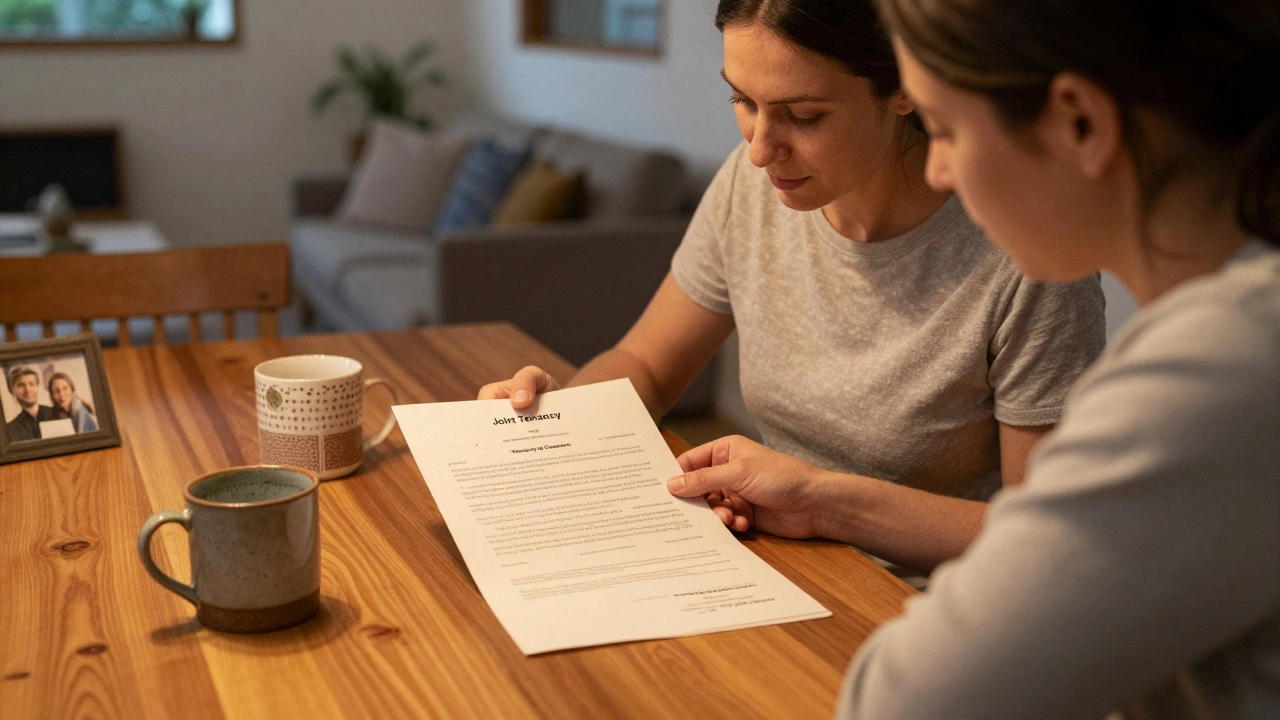
Deed Ownership Calculator
This calculator helps married couples determine fair ownership percentages based on financial contributions to a home purchase and recommends the appropriate deed type for your situation.
When a married couple buys a home together, the most important decision isn’t the color of the kitchen cabinets or the size of the backyard. It’s the deed. Not the mortgage. Not the inspection. Not even the price. The deed is the legal foundation of what happens if things go well-or if they don’t. And in New Zealand, where housing is tight and relationships are complex, the right deed can mean the difference between security and chaos.
Why the Deed Matters More Than You Think
Most couples assume that if they’re married, the house automatically belongs to both. It doesn’t. In New Zealand, marriage doesn’t override property law. If you buy a home and only one name is on the title, the other partner has no legal claim-even if they paid half the deposit, cleaned the gutters for five years, or stayed home to raise the kids. That’s not fairness. That’s risk.
Back in 2023, a couple in Christchurch split after 12 years. The wife had been a stay-at-home parent. The husband had put his name alone on the deed when they bought the house. When they separated, she got nothing from the property. Not because the court was unfair, but because the deed said so. That’s not rare. It’s common.
The best deed for a married couple isn’t about romance. It’s about protection. It’s about clarity. And in shared ownership homes-where one partner might have more savings, or one came into the relationship with assets-it’s the only thing that keeps things from turning ugly.
Three Types of Deeds, One Clear Winner
There are three ways to hold title on a home in New Zealand:
- Joint Tenancy-Both owners have equal shares. If one dies, the other automatically gets the whole property. No will needed. No court process. This is the most common choice for married couples.
- Tenancy in Common-Each person owns a specific percentage (50/50, 60/40, etc.). If one dies, their share goes to their estate, not automatically to the partner. Useful if one person contributed more money.
- Sole Ownership-Only one person is on the deed. The other has no legal rights. Never recommended for married couples unless there’s a very specific, documented reason.
For most married couples, joint tenancy is the best deed. It’s simple. It’s automatic. It’s designed for life partners. If one of you passes away, the other doesn’t have to fight for the home. No probate. No delays. No lawyers. Just the survivor walking into a house that’s still theirs.
But here’s the catch: joint tenancy only works if both people are truly equal partners. What if one person paid 80% of the deposit? What if one partner is self-employed and the other has a stable salary? That’s where things get tricky.
When Joint Tenancy Isn’t Enough
Let’s say you and your partner bought a shared ownership home in Auckland in 2024. You put down $120,000 from your savings. Your partner put down $30,000. You both earn the same now, but your savings were from your family’s inheritance. You want to protect that.
Joint tenancy would split the property 50/50-even though you paid 80% of the down payment. That’s not fair. And if you split up, you could lose tens of thousands.
That’s when tenancy in common becomes the smarter move. You can hold the property as 80/20. You own 80%. Your partner owns 20%. You both pay the mortgage and bills according to your shares. If one of you dies, your share goes to your will-maybe to your kids, your parents, or your partner. It’s flexible. It’s fair.
And here’s the thing: you can still have joint tenancy for the mortgage and tenancy in common for the title. Banks don’t care how the title is held-they care that you both can repay. The deed? That’s between you and the law.
How to Set It Up Right
Getting the right deed isn’t something you do at the real estate office while signing paperwork. It’s something you do with a lawyer-before you sign anything.
- Have an honest conversation about money, contributions, and future plans. No sugarcoating.
- Get a property lawyer involved. Not a conveyancer. A lawyer who specializes in relationship property.
- Decide on the type of ownership: joint tenancy or tenancy in common.
- If using tenancy in common, specify exact percentages in writing.
- Sign a relationship property agreement (RPA) under the Property (Relationships) Act 1976. This overrides the default 50/50 split after three years of marriage.
- Register the deed correctly at Land Information New Zealand (LINZ).
Don’t skip the RPA. It’s not about expecting divorce. It’s about planning for life. In Auckland, the average marriage lasts 15 years. But 40% end in separation. If you don’t have an RPA, the law will decide what’s fair-and it might not match your reality.
Real-Life Example: The Henderson Couple
In 2022, Sarah and Mark bought a shared ownership home in Henderson. Sarah had $150,000 saved. Mark had $50,000. They bought a $580,000 home. They put 20% down-$116,000. Sarah paid $92,800. Mark paid $23,200.
They went with joint tenancy. “We’re married,” they said. “It’s fine.”
Five years later, Mark lost his job. Sarah kept working. She paid the mortgage alone. He started spending more time away. They separated. Sarah assumed she’d get the house. The court said no. Under the Property (Relationships) Act, everything acquired during the relationship is split 50/50-even if one person paid more. Sarah got $290,000. Mark got $290,000. She lost $60,000 in equity she put in.
If they’d used tenancy in common (80/20) and signed an RPA, Sarah would have kept her share. No court battle. No heartbreak. Just fairness.

What If You Already Bought the House?
It’s not too late. You can change the deed-even after you’ve lived in the house for years.
You’ll need:
- Both partners agreeing in writing
- A lawyer to draft a new title
- Payment of a small fee to LINZ
It’s not cheap-around $800-$1,500 depending on complexity-but it’s cheaper than a court fight. And it’s far better than regret.
Many couples wait until something goes wrong to fix the deed. Don’t wait. Do it now. Even if you’re happy. Even if you think you’ll never split. Because the best deed isn’t about fear. It’s about respect.
Final Rule: The Deed Is the Foundation
The best deed for a married couple isn’t the one that sounds romantic. It’s the one that matches your reality. It’s the one that protects both of you. It’s the one that says, “I see your contribution. I honor your effort. I want you to be safe.”
Whether you’re buying your first shared ownership home in Porirua, upgrading in Tauranga, or settling in Dunedin-get the deed right. Talk to a lawyer. Write it down. Register it. Don’t let the system decide your future for you.
Marriage is a partnership. So should your home.
Is joint tenancy the best deed for all married couples?
Joint tenancy works well when both partners contribute equally and want automatic inheritance rights. But if one person put in significantly more money, or if there are children from a previous relationship, tenancy in common is often safer and fairer.
Can I change the deed after buying a home?
Yes. You can change from joint tenancy to tenancy in common-or vice versa-at any time. Both partners must agree in writing, and a lawyer must file the change with Land Information New Zealand (LINZ). There’s a small fee, but it’s far less than the cost of a legal dispute later.
Does marriage automatically give me rights to my partner’s property?
No. Under New Zealand law, marriage doesn’t automatically give you ownership of property titled in your partner’s name. After three years of marriage, the Property (Relationships) Act assumes a 50/50 split of relationship property-but only if the property is legally classified as such. If your name isn’t on the deed, you have no legal claim unless you prove financial or non-financial contribution.
What’s a relationship property agreement (RPA)?
An RPA is a legally binding contract signed by both partners that says how property will be divided if the relationship ends. It can override the default 50/50 split under the Property (Relationships) Act. It’s especially useful if one partner has more assets, owns a business, or received a gift or inheritance.
Do I need a lawyer to change the deed?
Yes. While you can fill out forms yourself, changing a property deed involves legal documents, land registry filings, and potential tax implications. A property lawyer ensures the change is valid, enforceable, and properly registered. DIY changes often lead to errors that cost more to fix later.