
Timeshare Cost Calculator
Your Timeshare Costs
Cost Comparison
Hotel/Airbnb Alternative
People often think buying a timeshare means owning a vacation home for a week each year-and that’s it. But if you’ve ever been handed a brochure at a resort tour, you know there’s more to it. The big question most new buyers ask is: Do you pay monthly for timeshare? The short answer? Yes, you do. And those monthly payments can add up faster than you expect.
What You’re Actually Paying For
A timeshare isn’t like buying a house where you own the deed outright. Instead, you buy the right to use a unit at a specific resort during a set time each year. That sounds simple, but the ownership structure is layered. You’re not just paying for a week in the sun-you’re paying to maintain that system for everyone else who owns a share.
These costs break down into three main parts: the initial purchase price, annual maintenance fees, and occasional special assessments. The monthly payment people talk about? That’s just the annual maintenance fee split into 12 installments. Most resorts do this to make it feel easier to swallow. But make no mistake: you’re still paying the same total amount, just in smaller chunks.
According to the American Resort Development Association (ARDA), the average annual maintenance fee for a timeshare in the U.S. is $1,000 to $1,500. That’s $83 to $125 every month. For a two-bedroom unit at a popular destination like Orlando or Myrtle Beach, it’s not uncommon to see fees over $2,000 a year. That’s $167 a month-just to keep the pool clean and the AC running.
Why These Fees Keep Going Up
Unlike a mortgage, where your payment stays mostly stable, timeshare fees have no ceiling. Resorts raise them every year to cover rising costs: labor, insurance, utilities, repairs, and upgrades. Inflation hits these properties hard. A resort that spent $50,000 on roof repairs in 2020 might need $85,000 in 2026. That cost gets divided among all owners.
Some resorts also add new amenities-like a spa, fitness center, or concierge service-and charge owners for the upgrade. You didn’t ask for it. You didn’t vote for it. But you still pay for it. There’s no legal way to opt out. Even if you never use the new hot tub, you’re still on the hook.
A 2023 survey by Timeshare Users Group found that 68% of owners saw their annual fees increase by 5% or more over the previous year. That’s higher than the national inflation rate. And unlike rent, you can’t walk away after a year. Timeshare contracts are legally binding for decades.
Hidden Costs You Might Not See Coming
Monthly maintenance fees are just the start. There are other charges that sneak in:
- Exchange fees: If you want to trade your week for a different resort or season, you’ll pay $100-$300 per exchange through companies like RCI or Interval International.
- Booking fees: Some resorts charge $50-$100 just to reserve your week, even if you already own it.
- Taxes: Property taxes on your timeshare unit are often included in the maintenance fee, but in some states, they’re billed separately. In Florida and Nevada, these can add $200-$600 a year.
- Transfer fees: If you ever try to sell or give away your timeshare, the resort will charge you $100-$500 to process the paperwork.
- Special assessments: Unexpected repairs-like replacing the entire pool lining or fixing elevator systems-can trigger one-time fees of $500 or more.
One owner in Arizona told me he paid $1,200 in annual fees, then got hit with a $1,800 special assessment for new HVAC units. He didn’t know it was coming. He couldn’t refuse it. He still owns the unit.
Can You Avoid These Payments?
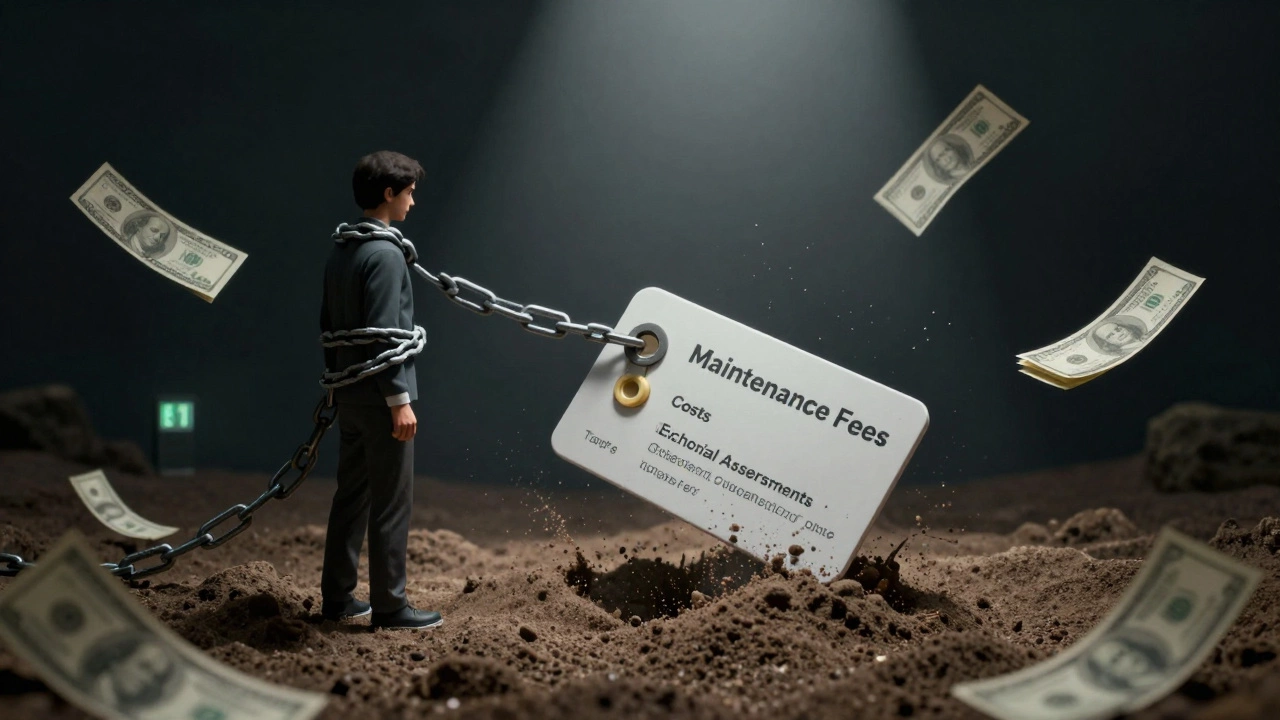
Some people think they can just stop paying. That’s a dangerous myth. If you miss a payment, the resort will send you notices. Then they’ll report you to credit agencies. After that, they can take legal action. In extreme cases, they can foreclose on your timeshare-just like a bank forecloses on a house.
And here’s the twist: even if you stop using it, you still owe the money. You can’t cancel by not showing up. You can’t get out by ignoring the bills. The contract doesn’t expire. It’s written to last 30, 50, or even 99 years. Some contracts pass to your heirs when you die.
There are legal ways to get out: resale, donation, or working with a licensed exit company. But beware: scams are everywhere. Companies that promise to get you out for $5,000? They’re often taking your money and doing nothing. The Federal Trade Commission warns that timeshare exit scams cost consumers over $50 million a year.
What Happens If You Want to Sell?
Selling a timeshare is harder than selling a house. Most people think they’ll recoup their original purchase price. They don’t. The resale market is flooded. A unit that cost $20,000 new might sell for $1,000-or nothing at all.
Resale platforms like RedWeek or Timeshare Rescue list thousands of units for sale. Many are priced under $500. But even at that price, you still have to pay the annual fees until the sale closes. And if you can’t find a buyer, you’re stuck.
Some owners try to donate their timeshare to charity. But most charities won’t take them. Why? Because the ongoing fees cost more than the unit is worth. The IRS doesn’t allow you to claim a tax deduction for a timeshare donation unless the charity sells it for a profit-and that rarely happens.

Is a Timeshare Worth It?
If you vacation at the same place every year, love the convenience, and can afford the fees, a timeshare might make sense. But if you’re buying because someone told you it’s an “investment,” you’re being misled. Timeshares don’t appreciate. They depreciate. They’re not assets-they’re liabilities.
Compare it to renting: for $1,500 a year in maintenance fees, you could rent a similar unit at a hotel or Airbnb for $1,200 and still have money left over. You’d get more flexibility, better service, and no long-term debt.
And here’s something most sales reps won’t tell you: 90% of timeshare owners say they’d buy it again if they could go back. That’s not because they love it. It’s because they feel trapped.
What to Do If You Already Own One
If you’re already in a timeshare and want out, here’s what actually works:
- Check your contract. Look for a rescission period (usually 5-10 days after purchase). If you’re within that window, cancel immediately.
- Try selling it yourself on a reputable resale site. List it for $100-$500 and be ready to pay the transfer fee.
- Contact the resort directly. Some will take it back for a fee, especially if you’ve paid all dues.
- Work with a licensed exit company that charges only after you’re free. Avoid upfront fees.
- If you’re struggling to pay, ask for a payment plan. Some resorts offer hardship programs.
Don’t wait until you’re in collections. The sooner you act, the more options you have.
Do you pay monthly for timeshare?
Yes, you pay monthly through annual maintenance fees that are typically split into 12 installments. These fees cover upkeep, utilities, cleaning, and management of the resort. Average monthly payments range from $83 to $125, but can exceed $167 for larger units or popular locations.
Are timeshare fees tax deductible?
No, timeshare maintenance fees and dues are not tax deductible for personal use. The IRS only allows deductions if you rent out the unit as a business and meet strict criteria. Most owners use their timeshare for personal vacations, so no deduction applies.
Can you walk away from a timeshare?
You can’t simply walk away. Timeshare contracts are legally binding and often last decades. Stopping payments leads to collections, credit damage, or even foreclosure. To get out, you must sell, donate, or use a licensed exit service.
What happens if you don’t pay timeshare fees?
If you stop paying, the resort will send reminders, then report you to credit bureaus. After that, they can sue you or foreclose on your ownership. This can hurt your credit score for years and lead to wage garnishment or liens on other property.
Is it better to rent or own a timeshare?
For most people, renting is better. You pay less, get more flexibility, avoid long-term fees, and don’t get stuck with rising costs. A week at a similar resort through Airbnb or a hotel often costs less than the annual maintenance fee alone.