Pet Rent Negotiation Calculator
Current Pet Rent Details
Negotiation Strategies
Estimated Savings
Monthly Pet Rent Reduction
$0.00
Long-Term Savings
$0.00
Recommended Strategy
Select your strategies to see the best approach.
Getting approved for a rental with a pet isn’t impossible, but it’s tougher than you might think. Landlords in Auckland and across New Zealand often charge extra fees just because you have a dog, cat, or even a rabbit. Pet rent, pet deposits, and strict breed restrictions are common. But here’s the truth: you don’t have to accept these costs as inevitable. There are real, practical ways to negotiate, bypass, or even eliminate pet rent entirely - if you know how to play the game.
Understand What Pet Rent Actually Is
Pet rent isn’t a government fee or a legal requirement. It’s a landlord’s choice. In New Zealand, there’s no law forcing tenants to pay extra for pets. The Residential Tenancies Act doesn’t mention pet fees at all. That means any extra charge is purely at the landlord’s discretion. Some property managers charge $10-$30 extra per month. Others ask for a $500 non-refundable pet deposit. A few even demand both.
But here’s the catch: pet rent often isn’t tied to actual damage. A 5kg cat won’t cause the same wear as a 30kg Labrador. Yet many landlords apply the same fee across all pets. That’s not fair - and it’s not always legal if it’s not clearly justified.
Prove Your Pet Is Well-Behaved
Landlords fear damage, mess, noise, and liability. If you can show them those fears are unfounded, they’re far more likely to waive pet rent.
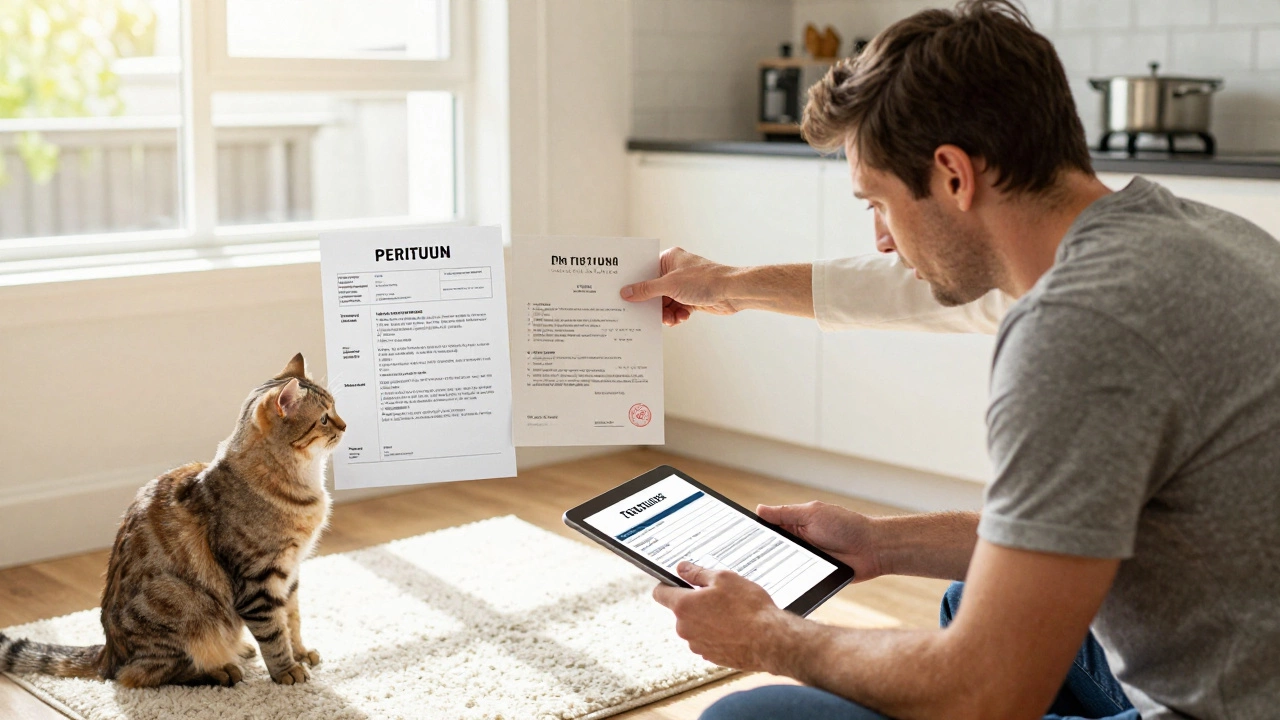
- Provide a pet resume: Include your pet’s age, breed, vaccination records, and whether they’re spayed/neutered. A sterilized pet is statistically less likely to cause problems.
- Share references: Ask your previous landlord or vet to write a short note confirming your pet was clean, quiet, and well-behaved.
- Offer a trial period: Propose a 2-week pet trial with weekly inspections. Show them your pet doesn’t scratch floors, bark at night, or leave hair everywhere.
A 2024 survey by Tenants’ Union Aotearoa found that 68% of landlords who allowed pets after seeing proof of good behavior did not charge extra. The key? Proof.
Choose the Right Property Type
Not all rentals treat pets the same. Some property types are far more pet-friendly than others.
- Units in small complexes: These often have fewer rules. The owner might live on-site and be more flexible.
- Private rentals: Landlords who manage their own properties are more likely to negotiate than big agencies.
- House rentals: Houses with yards are easier to approve than apartments. Dogs don’t need to be confined indoors all day.
- State housing: Kāinga Ora allows pets with approval - and no extra fees. They require a pet application, but no deposit or monthly charge.
Look for listings that say "pets considered" instead of "no pets." That phrase means they’re open to negotiation. Avoid listings with "strictly no pets" - those are rarely negotiable.
Offer to Cover Extra Costs
Instead of paying pet rent, offer to pay for something tangible. This turns a vague fee into a specific, fair trade.
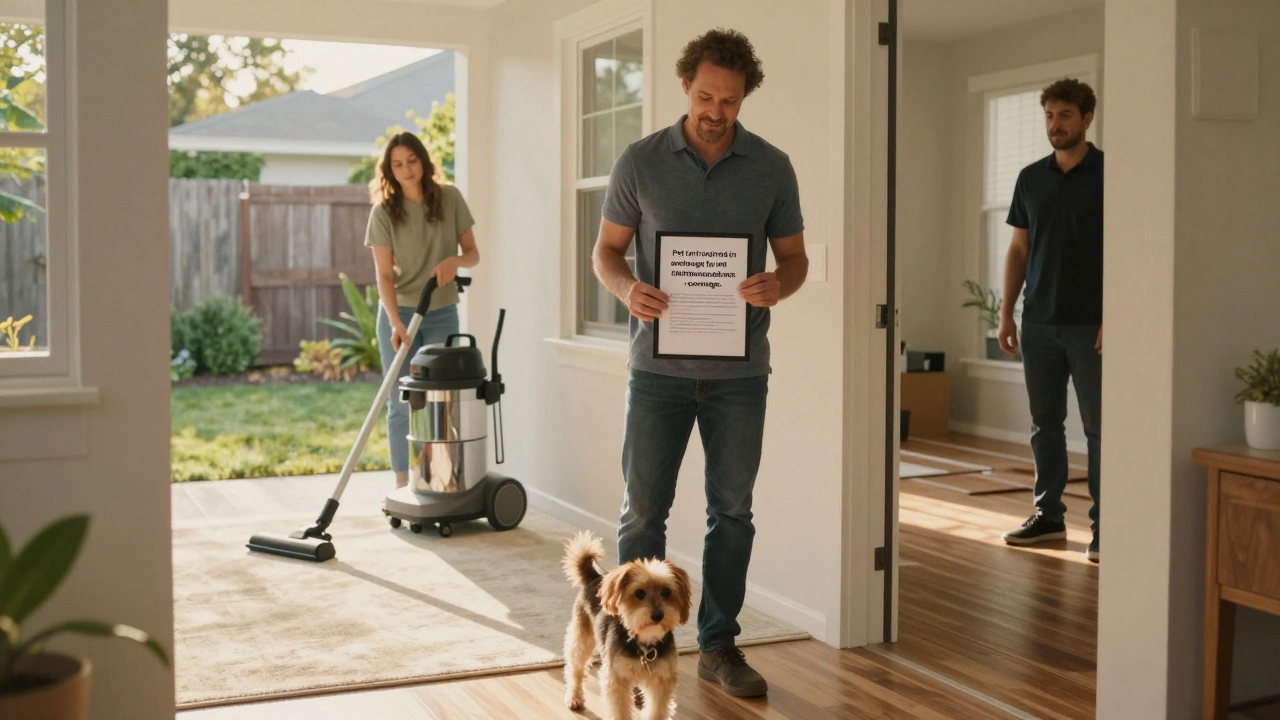
- Pay for professional carpet cleaning after you move out.
- Offer to install pet-friendly flooring (like vinyl plank) at your own cost.
- Volunteer to cover any damage caused by your pet - with photos and receipts.
- Propose a slightly higher bond (e.g., $200 more) instead of a pet deposit.
Landlords prefer predictable, one-time costs over ongoing monthly fees. A $300 bond increase is easier to approve than $25/month for five years.
Use Pet Insurance as Leverage
Many landlords worry about liability if your pet bites someone or damages property. Pet insurance solves that.
Get a basic pet liability policy - they start at $15/month in New Zealand. Show them the policy document. Say: "I’ve insured against any damage or injury caused by my pet. This covers the landlord too."
Auckland-based property manager Sarah Li told us: "I’ve had three tenants in the last year who brought insurance. All three got approved without pet rent. It removes the risk entirely. It’s the smartest move I’ve seen."
Get a Pet Reference from a Professional
A vet or dog trainer can be your secret weapon.
Ask your vet to write a short letter confirming your pet is healthy, vaccinated, and well-trained. If your dog has completed obedience classes, include that certificate. A certified dog trainer’s note carries weight - especially if they’ve worked with your pet for months.
One tenant in Mt. Roskill got her pet rent waived after submitting a 200-hour obedience training log from a registered trainer. The landlord said: "If they’ve put that much effort in, they’re not going to be careless."
Ask for a Pet-Only Clause in the Tenancy Agreement
Don’t just accept the standard lease. Ask to add a clause that says:
"The landlord agrees to waive the pet rent fee in exchange for the tenant’s commitment to maintain the property in good condition and cover any pet-related damage beyond fair wear and tear."
Write it out. Print it. Hand it to the landlord. It sounds official. It feels fair. And it legally binds them to the agreement.

Know Your Rights - and When to Push Back
Landlords can’t ban pets outright without a valid reason. Under the Residential Tenancies Act, they can only refuse pets if:
- The property is in a heritage building with structural restrictions
- The pet is dangerous or unvaccinated
- The pet has caused damage in a previous tenancy
If they say "no pets" just because they "don’t like them," that’s not a legal reason. You can file a dispute with the Tenancy Tribunal. It’s not something you want to do lightly - but it’s an option if you’re being treated unfairly.
What If You’re Still Charged?
Even if you can’t avoid pet rent, you can reduce it. Try these tactics:
- Negotiate a lower monthly fee - $10 instead of $30.
- Ask for a one-time deposit instead of monthly charges.
- Request that the fee be waived after 12 months of no damage.
- Bundle it into your rent: "Can I pay $50 more in rent per month instead of $30 pet rent?" Sometimes they prefer one flat number.
One tenant in Takapuna got her $25/month pet rent dropped to $5 after offering to clean the carpets every 6 months. She saved $240 a year.
Final Tip: Build a Relationship, Not a Transaction
Landlords aren’t monsters. They’re people. Show them you’re responsible. Be polite. Be prepared. Be persistent.
Send a short video of your pet calmly sitting while you clean up after them. Include a photo of your pet sleeping peacefully on a clean rug. Write a note: "I know pets mean extra work. I’m committed to making this work for both of us."
Most landlords will say yes - not because they have to, but because they want to. They’d rather have a reliable tenant with a quiet pet than a vacant unit.
Can a landlord refuse my pet just because it’s a certain breed?
In New Zealand, landlords cannot refuse a pet based solely on breed unless the animal is classified as a "dangerous dog" under the Dog Control Act. Even then, they must prove the specific dog poses a real risk. Breed bans based on stereotypes (like "pit bulls are aggressive") are not legally valid reasons to deny a pet.
Is pet rent refundable?
No - pet rent is a monthly fee and is not refundable. However, a pet deposit (a one-time payment) should be returned if there’s no damage caused by the pet. Always get a written agreement that clearly states what the deposit covers and under what conditions it will be returned.
Can I have more than one pet?
Yes - but landlords can limit the number of pets. You’ll need to justify why multiple pets are necessary and demonstrate that they won’t cause overcrowding or noise. Some landlords allow two small pets but not three large dogs. Always ask in writing and get approval before bringing in additional animals.
Do emotional support animals have special rights?
Unlike in the US, New Zealand does not legally recognize emotional support animals as service animals. You still need landlord approval for any pet, including emotional support animals. However, if your pet is a certified assistance animal (e.g., guide dog for the blind), landlords must allow it under the Human Rights Act.
What if my pet causes damage?
You’re responsible for all damage caused by your pet, whether or not you paid pet rent. The landlord can use your bond to cover repairs - but only for damage beyond fair wear and tear. Keep photos of the property before you move in. If you’re unsure what counts as damage, get a pre-move-in inspection report.