
Luxury Housing Value Calculator
This calculator evaluates how well a property meets key luxury housing criteria based on the article's definition of true luxury living. Select features to see your luxury score.
Quality Materials Premium Finishes
Discreet Technology Smart Systems
Privacy Design Sound & Light Control
Exclusive Access Privileged Services
Luxury Value Assessment
Your property meets 0 key luxury criteria
When someone says "luxury housing," they’re not just talking about a big house with a fancy kitchen. Luxury housing in 2025 is about precision, exclusivity, and experience-everything designed to remove friction from daily life and replace it with quiet confidence. It’s not about how many square meters you have, but how every detail serves you without asking for attention.
It’s Not Just Size-It’s Quality
A 300-square-meter apartment in downtown Auckland doesn’t automatically become luxury just because it’s large. Luxury housing is defined by materials that age gracefully: solid oak floors with hand-rubbed finishes, marble countertops sourced from quarries with traceable origins, and brass fixtures that develop a patina instead of chipping or tarnishing. You won’t find laminate veneers or mass-produced tiles. Instead, you’ll see custom-cast concrete walls, imported Italian cabinetry, and hidden LED lighting that adjusts to the time of day.
These aren’t just aesthetic choices. They’re functional ones. A luxury kitchen isn’t just for show-it’s engineered for performance. Induction cooktops with precise temperature control, integrated refrigeration systems that maintain humidity levels for produce, and silent dishwashers that run during your evening walk. These aren’t upgrades. They’re baseline expectations.
Location Is Everything-But Not the Way You Think
Yes, luxury housing is often in prime locations: waterfront views in Viaduct Harbour, private access to botanical gardens in Epsom, or penthouses with 360-degree city skylines. But location today means more than views. It means proximity to services that don’t advertise themselves. Private elevators that take you directly from garage to apartment. On-site concierge teams who arrange dry cleaning, book last-minute spa appointments, or source rare truffles for your dinner party. Security isn’t just cameras-it’s biometric access, 24/7 on-site staff, and discreet surveillance that never feels intrusive.
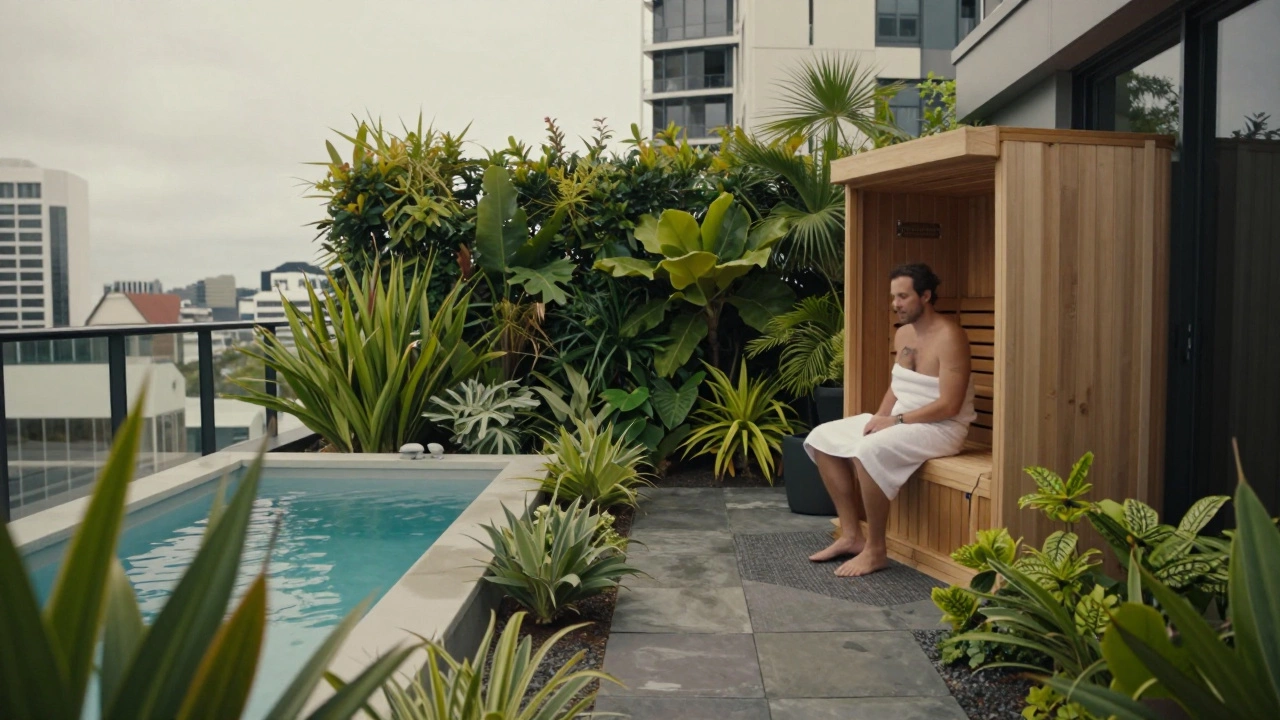
Some of the most valuable luxury apartments in 2025 aren’t the tallest or the most visible. They’re the ones with quiet courtyards, soundproofed walls that block street noise, and windows designed to filter UV rays without dimming natural light. In Auckland, buyers are increasingly choosing buildings with rooftop gardens that double as private retreats, or those with dedicated wellness floors featuring yoga studios, infrared saunas, and cold plunge pools.
Technology That Disappears
Luxury housing doesn’t scream "smart home." It whispers. The lighting dims automatically as you enter the bedroom. The blinds adjust based on the sun’s angle. The temperature adjusts not just by room, but by your personal preference-learned over time, not programmed manually. Voice assistants are optional. Most luxury apartments in 2025 use gesture controls, motion sensors, and AI-driven climate systems that learn your habits without ever asking you to say "Hey Siri."
Security systems integrate with your phone, but you rarely need to open an app. If a delivery arrives, the system notifies your concierge. If a window is left open during rain, it closes itself. These aren’t gimmicks. They’re silent promises: you’ll never have to worry about the small things.
Privacy as a Standard, Not a Feature
Privacy in luxury housing isn’t about locked gates or high fences. It’s about design that anticipates human need. Apartments are oriented so no neighboring unit can see into your living space. Elevators don’t stop on every floor-only the ones you select. Mail is delivered to a secure, climate-controlled lobby, not a shared mailbox. Even the HVAC system is designed to prevent sound transfer between units. In high-end buildings, you won’t hear your neighbor’s TV, their footsteps, or their conversations. That’s not luck. That’s engineering.
Some developments now offer "privacy zones"-areas within the building where residents can meet without being seen or overheard. Think private dining rooms, soundproofed reading nooks, or rooftop terraces accessible only by key fob. These spaces aren’t marketed. They’re quietly offered to residents who value silence.
Exclusivity Through Access, Not Price Tags
Luxury housing isn’t sold by price alone. It’s sold by access. The most desirable units in 2025 aren’t the most expensive-they’re the ones with the rarest privileges. A private boat dock at the base of the building. A reserved parking spot with electric vehicle charging that’s always available. Membership to a residents-only club with curated art exhibitions, wine tastings, and chef-led dinners. These aren’t amenities you sign up for. They’re part of the ownership package.
In Auckland, some luxury developments partner with local vineyards to offer residents first access to limited-release wines. Others collaborate with private schools to guarantee enrollment for children. These aren’t marketing ploys. They’re carefully curated benefits that reflect the lifestyle the building was designed for.

What Luxury Housing Is Not
Luxury housing isn’t gold-plated faucets or chandeliers in every room. It’s not about flash. It’s not about showing off. The most successful luxury developments avoid overt opulence. They avoid marble floors in bathrooms that are too cold to walk on barefoot. They avoid oversized bathtubs that require a ladder to get into. They avoid kitchens with five ovens when two do the job perfectly.
Luxury is restraint. It’s knowing when to stop. It’s choosing one exceptional material over ten mediocre ones. It’s leaving space-physical and mental-for the person who lives there, not the person who’s taking photos for Instagram.
Who Buys Luxury Housing Today?
The typical luxury buyer in 2025 isn’t a flashy entrepreneur or a celebrity. They’re often high-earning professionals-surgeons, tech founders, international investors-who’ve seen enough overpriced "luxury" to know what’s real. They’re tired of paying for things they don’t use. They want efficiency, quiet, and longevity. Many buy with the intention of living there for decades, not flipping for profit.
There’s also a growing segment of international buyers from Asia and the Middle East who prioritize discretion and security over spectacle. For them, luxury isn’t about being seen-it’s about being left alone, with everything perfectly in place.
Future Trends: What’s Coming Next
Luxury housing in 2025 is already evolving. The next wave includes homes with built-in air purification systems that monitor and filter pollutants in real time. Some new developments are testing biophilic design that integrates living walls and indoor water features to improve mental well-being. Others are experimenting with modular interiors-walls and partitions that can be reconfigured by residents without construction crews.
Sustainability is no longer optional. Luxury buyers now expect net-zero energy consumption, rainwater harvesting, and carbon-neutral construction materials. The most forward-thinking developments are even offering residents a digital dashboard showing their home’s environmental impact-down to the kilowatt-hour.
One thing won’t change: luxury will always be about trust. Trust that the materials won’t fail. Trust that the service will be there when needed. Trust that the space was made for you-not for someone else’s idea of what luxury looks like.
What makes a property truly luxury versus just expensive?
A property becomes luxury when every element-from the materials to the service-is chosen for long-term performance and quiet excellence, not for show. Expensive properties may have high price tags and flashy finishes, but luxury properties are designed to work seamlessly with your life. Think hand-finished oak floors that last 50 years, not marble countertops that chip after two. Luxury is about consistency, not cost.
Is luxury housing only for the ultra-rich?
Not necessarily. While luxury housing often costs more, it’s not always about income. Many buyers are professionals who’ve saved for years or sold previous properties to upgrade. In Auckland, it’s common to see doctors, engineers, and tech founders buying luxury apartments as long-term homes-not status symbols. The key is prioritizing value over volume: fewer, better things over many expensive ones.
Do luxury apartments appreciate faster than regular ones?
Historically, yes-especially in cities like Auckland where demand for premium, well-located properties outpaces supply. Luxury apartments in prime areas have shown 5-8% annual appreciation over the past decade, even during market dips. But this isn’t guaranteed. The best performers are those with strong design, exclusive access, and proven management. A luxury apartment with poor maintenance or no concierge service won’t hold value.
Can you rent a luxury apartment, or is it only for purchase?
You can rent luxury apartments, but it’s less common. Most luxury developments are designed for ownership, with long-term residents in mind. Rental units do exist, often as short-term stays for corporate executives or international visitors. However, rental luxury apartments usually lack the full suite of owner benefits-like private clubs, reserved parking, or custom interiors. Ownership gives you control over the space, which is part of the appeal.
What should I look for when inspecting a luxury apartment?
Look beyond the finishes. Check the thickness of the walls-luxury units typically have 15-20cm concrete walls for soundproofing. Test the doors and drawers-do they close silently? Are the handles heavy and solid? Ask about the building’s HVAC system and whether it’s zoned per apartment. Request maintenance records. A luxury building should have a full-time engineer on staff. And don’t forget to walk around at night-listen for noise from neighbors or street traffic. Silence is the true sign of quality.