
FHA Loan Down Payment Calculator
FHA Loan Requirements Calculator
Calculate your required down payment percentage and amount based on your credit score. FHA loans require different down payments depending on your credit score.
If you're a first-time home buyer wondering if you can qualify for an FHA loan, the short answer is: credit score matters-but it’s not the only thing that matters. Many people think they need a perfect score to buy a home. That’s not true. The FHA loan program was created specifically to help people with lower credit scores get into homeownership. In 2025, the minimum credit score needed to qualify for an FHA loan is 500, but there’s a catch.
Minimum Credit Score: 500 to 580
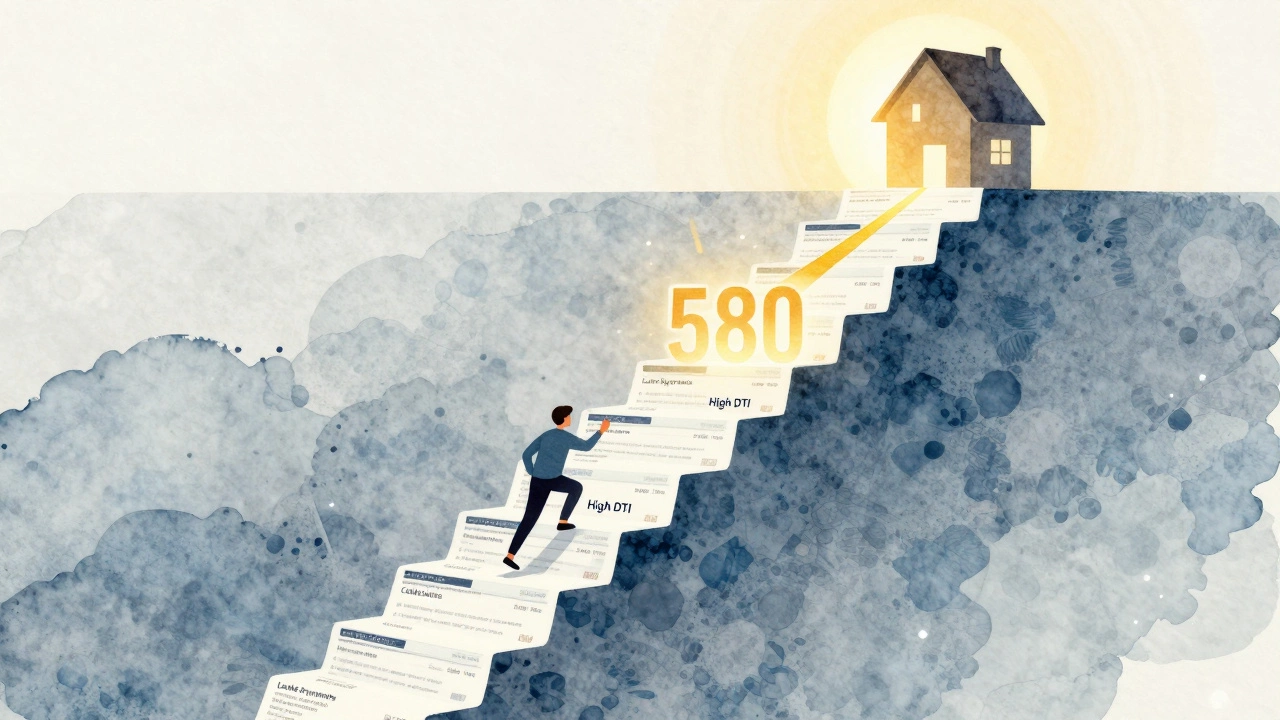
The Federal Housing Administration (FHA) sets two credit score thresholds for its loans. If your score is between 500 and 579, you can still get approved-but you’ll need to put down at least 10% of the home’s purchase price. That’s a big jump from the typical 3.5% down payment most people expect. Most borrowers aim for a score of 580 or higher because that’s when the down payment drops to just 3.5%, which is one of the lowest in the industry.
For example, if you’re buying a $300,000 home, a 3.5% down payment is $10,500. At 10%, you’d need $30,000. That’s a $19,500 difference. That’s why nearly 90% of FHA borrowers have scores of 580 or above. Lenders aren’t required to accept scores below 580, even though FHA allows it. Most banks and mortgage companies set their own rules, and many won’t touch a loan under 620.
Why Lenders Set Higher Bars Than FHA
FHA doesn’t lend money directly. It insures loans made by private lenders. That means banks and credit unions decide who they want to approve, even if FHA says they can. If you have a 550 credit score, a lender might say no-not because FHA won’t allow it, but because they’re worried you’ll default. They’ve seen too many borrowers with low scores struggle with payments, especially when unexpected expenses come up.
That’s why your credit score isn’t the whole story. Lenders also look at your debt-to-income ratio (DTI). If your monthly debts (car payments, student loans, credit cards) eat up more than 43% of your income, you’re unlikely to qualify-even with a 650 score. Some lenders will stretch to 50% DTI if you have strong savings or a steady job history.
What Counts as a Credit Score for FHA?
FHA uses your middle credit score from the three major bureaus: Experian, Equifax, and TransUnion. If you have scores of 590, 610, and 605, FHA looks at 605. If you have two scores tied for middle, they take the lower one. That’s why it’s smart to check all three reports before applying.
Not all credit scores are created equal. FHA doesn’t use FICO 8 or VantageScore 4.0. It uses FICO Score 2, 4, or 5-older versions that are more sensitive to late payments and collections. That means a medical bill in collections might hurt your FHA score more than it hurts your regular FICO score. If you’ve paid off old debts, make sure your credit report reflects it. Dispute errors. Get collections marked as paid. Even small fixes can push you over the 580 line.
Other Requirements Beyond Credit
A credit score alone won’t get you a home. FHA also requires:
- A valid Social Security number and legal U.S. residency
- Proof of steady income-usually two years of employment history
- A property that meets FHA appraisal standards (no major safety hazards)
- Completion of a homebuyer education course (required in some states)
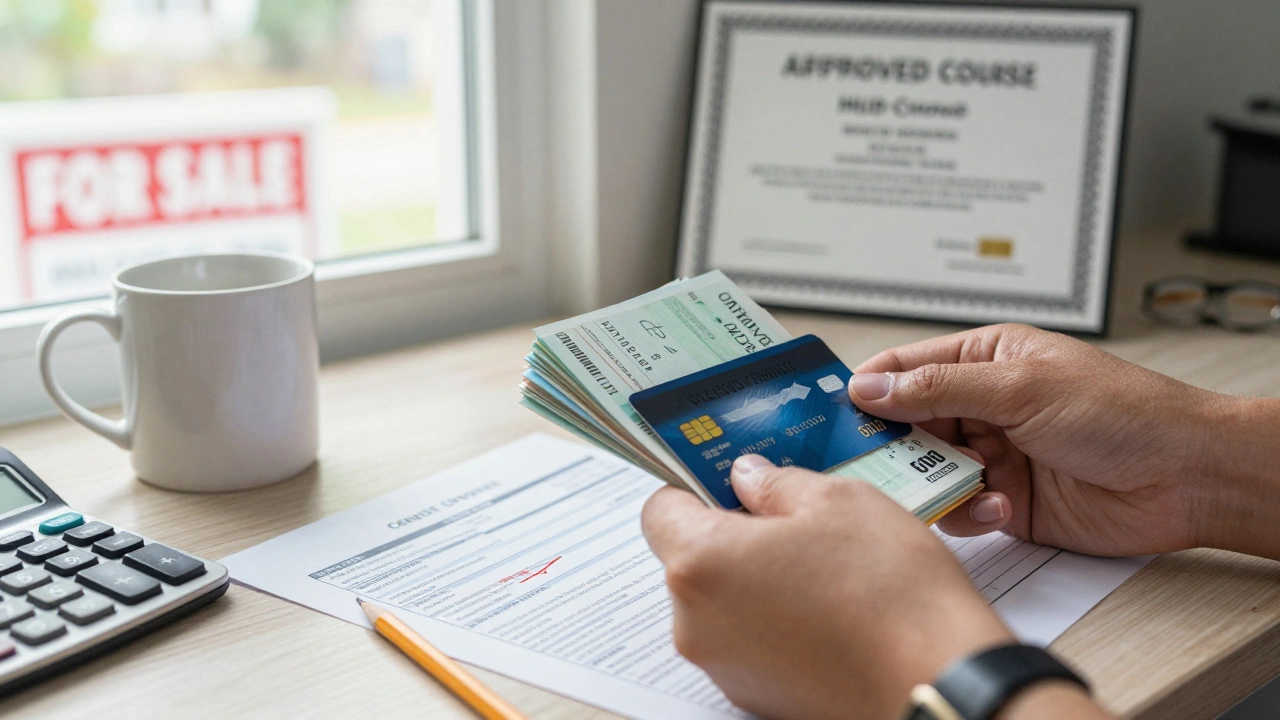
Some states, like California and New York, require first-time buyers to take a free HUD-approved course before closing. These courses teach budgeting, how to avoid predatory loans, and what to expect during inspections. They’re not just paperwork-they help you avoid mistakes that cost people their homes.
Can You Improve Your Score Fast?
Yes-but it takes focus. Here’s what works in 30 to 90 days:
- Pay down credit card balances to under 30% of your limit. If you owe $5,000 on a card with a $10,000 limit, pay it down to $3,000. That alone can boost your score by 20 to 40 points.
- Ask creditors to remove late payments if you’ve been on time for the last 6 months. Many will do it as a goodwill gesture.
- Don’t open new credit accounts. Each hard inquiry drops your score a few points.
- Check your report for errors. A $500 medical bill listed twice? Get it corrected. One person in New Zealand improved their score by 78 points just by removing duplicate collections.
There’s no magic trick. But if you’re serious, you can move from 540 to 600 in under three months. That’s enough to unlock the 3.5% down payment.
What If Your Score Is Below 500?
If your score is under 500, FHA won’t approve you. But that doesn’t mean you’re stuck. Start by rebuilding your credit. Get a secured credit card. Make on-time payments for six months. Pay off small debts. Use credit-building tools like Experian Boost or UltraFICO. Some lenders offer non-FHA loans for people with low scores, but those often come with higher interest rates and fees. It’s better to fix your score first.
How FHA Loans Compare to Other Options
Here’s how FHA stacks up against other first-time buyer loans in 2025:
| Loan Type | Minimum Credit Score | Minimum Down Payment | PMI Required? |
|---|---|---|---|
| FHA Loan | 500 | 10% (at 500-579), 3.5% (580+) | Yes, for life if down payment < 10% |
| Conventional Loan (Fannie Mae HomeReady) | 620 | 3% | Yes, until 20% equity |
| VA Loan (Veterans) | No official minimum | 0% | No |
| USDA Loan (Rural Areas) | 640 (automated) | 0% | Yes, annual fee |
| State First-Time Buyer Programs | 580-620 | 0-5% | Varies |
FHA wins for low credit scores. But if you can hit 620, a conventional loan might save you money long-term. FHA mortgage insurance lasts the life of the loan unless you put down 10% or more. Conventional loans drop PMI once you hit 20% equity. That’s a big difference over 15 years.
Real Stories: Who Got In With a Low Score?
Anna, 28, worked as a dental assistant in Seattle. Her credit score was 562 after a medical emergency and two missed payments. She saved $8,000 for a down payment on a $220,000 home. She qualified for FHA because her DTI was only 31%, and she had two years of steady pay stubs. She paid $7,700 down (3.5%) and got her loan approved in 38 days.
James, 32, had a 510 score. He had student loans and a car payment. He couldn’t get past the lender’s 620 cutoff. He spent six months paying down credit cards, disputing an old collection, and getting his score to 595. Then he applied again-and got approved.
These aren’t rare cases. They’re everyday people who took action.
Next Steps: What to Do Now
If you’re thinking about an FHA loan in 2025:
- Get your credit reports from AnnualCreditReport.com. Check all three bureaus.
- Find your middle score. If it’s under 580, make a plan to raise it.
- Save for your down payment-even if it’s $50 a week.
- Call a local FHA-approved lender. Ask what their minimum score is. Don’t assume it’s 500.
- Take a homebuyer course. Many are free online.
You don’t need perfect credit to own a home. You just need to be willing to take the steps. FHA loans were made for people like you-not the ones with perfect scores, but the ones who are trying.
What is the lowest credit score to get an FHA loan?
The lowest credit score FHA allows is 500. But if your score is between 500 and 579, you’ll need to put down at least 10% of the home’s price. Most borrowers aim for 580 or higher to qualify for the 3.5% down payment option.
Can I get an FHA loan with a 550 credit score?
Yes, you can. But you’ll need a 10% down payment. For example, on a $250,000 home, you’d need $25,000 upfront. Many lenders won’t approve you at 550, so shop around. Some credit unions and smaller banks are more flexible than big national lenders.
How long does it take to improve my credit score for an FHA loan?
It can take as little as 30 days if you pay down credit card balances and fix errors. For most people, it takes 3 to 6 months of consistent payments and reducing debt. Focus on paying bills on time and lowering your credit utilization rate.
Does FHA require a home inspection?
No, FHA doesn’t require a home inspection, but it does require an appraisal. The appraisal checks for safety issues like broken windows, mold, or faulty wiring. If the home doesn’t meet FHA’s minimum property standards, repairs must be made before closing.
Can I use an FHA loan to buy a fixer-upper?
Yes, through the FHA 203(k) loan program. This lets you combine the purchase price and renovation costs into one loan. You’ll need a contractor’s bid and a plan approved by FHA. It’s perfect for first-time buyers who want to improve a home instead of buying one that’s already perfect.
Do I need to be a first-time buyer to get an FHA loan?
No. FHA loans are available to anyone who meets the credit and income requirements-even if you’ve owned a home before. But you can’t have another FHA loan outstanding. If you sold your last home and paid off the FHA loan, you’re eligible again.