
Shared Ownership Risk Calculator
Your Shared Ownership Risk Assessment
This tool helps you understand your personal risk level based on key factors discussed in the article. Answer the questions below to get your personalized risk assessment.
Your Risk Assessment
Based on data from New Zealand Law Society (2024) showing 40% of shared ownership agreements end in conflict within 3 years
Home sharing sounds ideal on paper: split the cost, live in a better neighborhood, build equity faster. But if you’ve ever tried it-or are thinking about it-you know the reality isn’t always smooth. People talk about the savings, the flexibility, the dream home you can’t afford alone. But rarely do they mention the fights, the legal messes, or the sleepless nights wondering if your co-owner will pay their share. Let’s cut through the hype and look at what home sharing really costs you-beyond money.
You’re not just sharing a house, you’re sharing your life
When you buy a home with someone else, you’re not just splitting the mortgage. You’re sharing your schedule, your noise tolerance, your cleaning standards, even your guest lists. One person might want quiet nights; the other throws weekly parties. One keeps the thermostat at 18°C; the other cranks it to 24°C. These aren’t small things. They’re daily friction points that build up. In Auckland, where rental prices have climbed 32% since 2022, many couples and friends turn to shared ownership to get into the market. But according to a 2024 survey by the New Zealand Law Society, nearly 40% of shared ownership agreements ended in conflict within three years-not because of money, but because of lifestyle clashes.What happens when someone wants out?
The biggest blind spot in shared ownership? Exit strategies. Most people sign a deed without thinking about what happens if one person loses their job, gets engaged, or just hates living there. Unlike renting, you can’t just give notice. You’re tied to the property-and to your co-owner-for as long as the mortgage lasts. If you want to sell and they don’t, you’re stuck. Courts can force a sale, but that’s expensive, slow, and messy. In 2023, a case in Wellington dragged on for 14 months because one owner refused to sell after a breakup. Legal fees hit $18,000. The house sold for $20,000 less than market value because of the stigma.Financial risks aren’t always obvious
You think you’re saving money, but shared ownership can actually cost more. Property taxes, insurance, repairs, strata fees-if one person falls behind, the other is on the hook. Banks don’t care if your co-owner is unemployed. They’ll come after you. And if you’re on a joint mortgage, your credit score takes a hit if they miss a payment-even if you paid yours on time. In 2024, a man in Christchurch lost his ability to get a new loan because his ex-partner defaulted on a shared equity home they bought together in 2021. He had paid every bill for two years, but the bank didn’t care. His credit report showed a default. He couldn’t buy a car, let alone another house.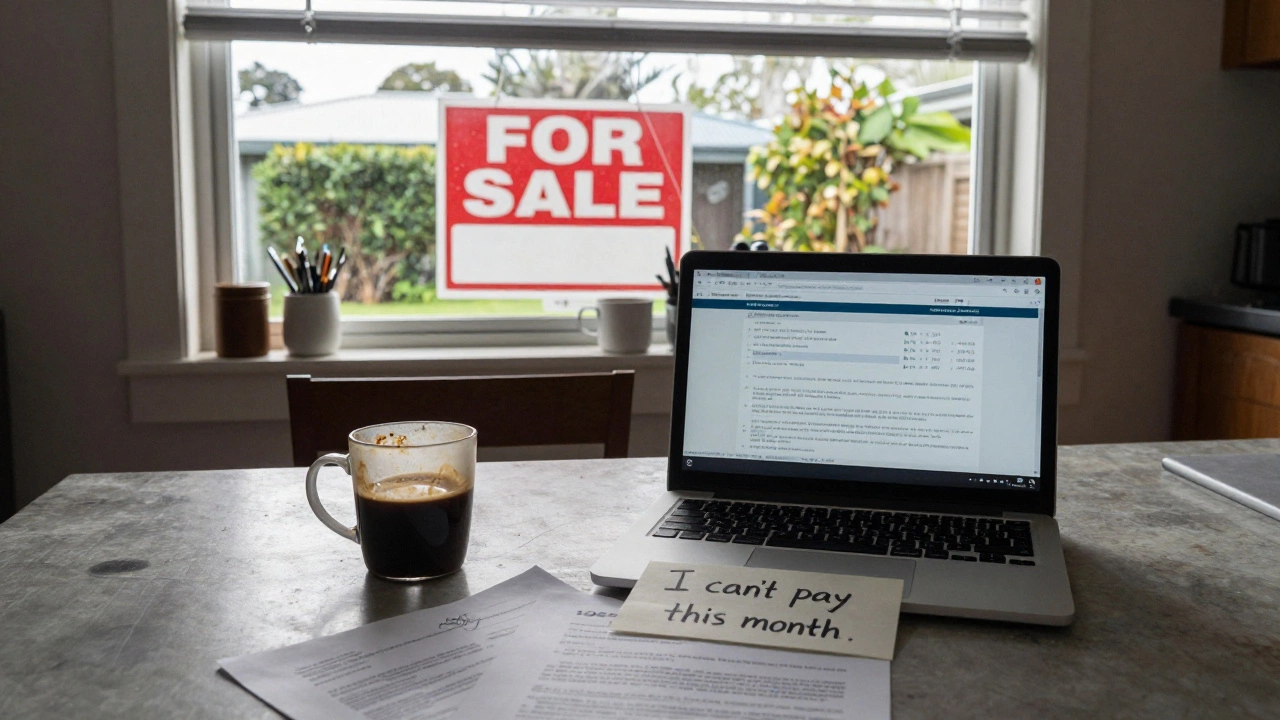
Changes in relationships change everything
Shared ownership often starts with friends, siblings, or partners. But relationships change. Breakups, divorces, new partners moving in, family emergencies-none of these are accounted for in the original agreement. One person might want to rent out their room after a job loss. Another might want to turn it into a home office. Without a clear, legally binding document, these decisions become power struggles. In Auckland, a 2023 case involved two sisters who bought a house together. One got engaged and wanted to bring her fiancé in. The other refused, saying it violated their original understanding. They ended up in mediation. The house sat empty for eight months. Neither got to live in it.Resale is harder-and slower
Selling a shared home isn’t like selling a standalone property. Buyers are wary. Lenders are cautious. Some banks won’t even finance a home where ownership is split between non-relatives. And if you’re trying to sell to a single buyer, you have to convince them they’re okay with the idea of sharing space with someone else’s equity stake. In 2025, a property in Ponsonby sat on the market for 11 months because buyers kept asking, “Who’s the other owner? Will they still live here?” The final sale price was 12% below comparable homes. That’s $84,000 lost on a $700,000 house.You lose control over your own space
In a shared home, you don’t get to decide everything. Want to paint the walls? Need permission. Want to install a new kitchen? You need your co-owner’s approval-and often, the bank’s too. Even small renovations can trigger disputes. One owner might want modern, minimalist design. The other loves rustic charm. Who wins? The one with more money? The one who speaks louder? In shared ownership, your home stops being yours. It becomes a negotiation. And that’s exhausting.
Legal documents are often ignored-or nonexistent
Most people think a handshake and a spreadsheet are enough. They’re not. In New Zealand, over 60% of shared ownership arrangements have no formal agreement. No deed of trust. No buyout clause. No dispute resolution process. That’s a disaster waiting to happen. Without a written contract, you’re relying on goodwill. And goodwill doesn’t pay the mortgage when someone walks away. A 2024 report from the Ministry of Justice found that 78% of property disputes involving co-owners went to court because there was no clear agreement. The cost? Average $15,000 per case. And even if you win, you’re still stuck with the house.It’s not a shortcut to wealth-it’s a gamble
People think shared ownership is a smart way to get into property. But it’s not a guarantee. If the market drops, you’re still on the hook for your share. If your co-owner can’t pay, you’re stuck covering it. If you need to move for work, you’re trapped. Real estate isn’t liquid. Unlike stocks or savings, you can’t sell a house in a week. And if you’re forced to sell under pressure, you lose. In 2023, a couple in Hamilton bought a shared home expecting to flip it in three years. The market stalled. They couldn’t sell. They couldn’t afford the payments. They lost the house to foreclosure. Their credit was ruined. They’re still paying off debt five years later.What’s the alternative?
If you want to get into property but can’t afford it alone, there are better options. First-home buyer grants, government co-investment schemes like KiwiBuild, or even buying a smaller property on your own with a longer-term plan can be safer. Renting isn’t throwing money away-it’s buying time. Time to save, time to build credit, time to find the right partner-not just for a home, but for life. Shared ownership isn’t wrong. But it’s not for everyone. And if you’re doing it because you’re scared you’ll never own a home, you’re not making a smart move. You’re making a desperate one.Can you sell your share of a shared ownership home without selling the whole property?
Technically, yes-but it’s extremely difficult. Most buyers don’t want to buy half a house. You’d need to find someone willing to co-own with your current partner, and your lender would have to approve them. Banks rarely allow this unless the new person is a close relative. In practice, most people who want to exit must sell the entire property and split the proceeds.
What happens if my co-owner stops paying the mortgage?
You’re legally responsible for the full amount. Joint mortgages mean both parties are equally liable. If your co-owner defaults, the bank will come after you. Missed payments will show up on your credit report-even if you paid your share. You can sue your co-owner later, but that costs money and time. By then, your credit score may already be damaged.
Do I need a lawyer to set up shared ownership?
Yes. You absolutely need a lawyer to draft a deed of trust that outlines ownership percentages, payment responsibilities, what happens if someone wants to sell, how disputes are resolved, and what happens in case of death or divorce. A standard property transfer form won’t cut it. In New Zealand, legal fees for this typically range from $1,200 to $2,500-but it’s far cheaper than going to court later.
Is shared ownership better than renting?
Only if you’re confident in your co-owner and the market. Renting gives you flexibility, no repair bills, and no liability for someone else’s financial mistakes. Shared ownership locks you in. If you’re unsure about long-term commitment, renting is the safer path. You can save more, move freely, and buy alone when you’re ready-without the baggage of a failed partnership.
Can I buy a shared home with a friend who isn’t family?
Yes, but lenders treat it differently. Many banks require both parties to be spouses, de facto partners, or immediate family. If you’re friends, you’ll likely need to apply for a private mortgage or work with a specialist lender. Even then, you’ll face stricter income checks and higher interest rates. The legal risks are also higher-without family ties, there’s less social pressure to cooperate.