Premium vs Luxury Apartment Cost Calculator
Choose Your Scenario
Premium Apartment Analysis
What You Get
Cost: 15-30% more than standard unit
Features: Hardwood floors, stainless steel appliances, gym, rooftop terrace
Services: Doorman, package handling
Monthly Cost:
Includes basic amenities
Luxury Apartment Analysis
What You Get
Cost: 50-200% more than premium unit
Features: Private elevators, spa with therapists, custom climate control
Services: Butler, personal chef, concierge team
Monthly Cost: $0
Includes service fees ($1,000-$3,000/month)
Key Difference
Premium apartments deliver noticeable upgrades without the steep price tag of luxury. (You pay for better finishes)
Luxury apartments are about services that anticipate needs before you ask. (You pay for personalized experiences)
When you’re looking at high-end apartments, you’ll hear two terms thrown around: premium and luxury. They sound similar-maybe even interchangeable-but they’re not. One is about better finishes. The other is about a whole new way of living. Confusing them could cost you thousands-or worse, leave you feeling disappointed after signing a lease or closing a deal.
What Premium Apartments Actually Offer
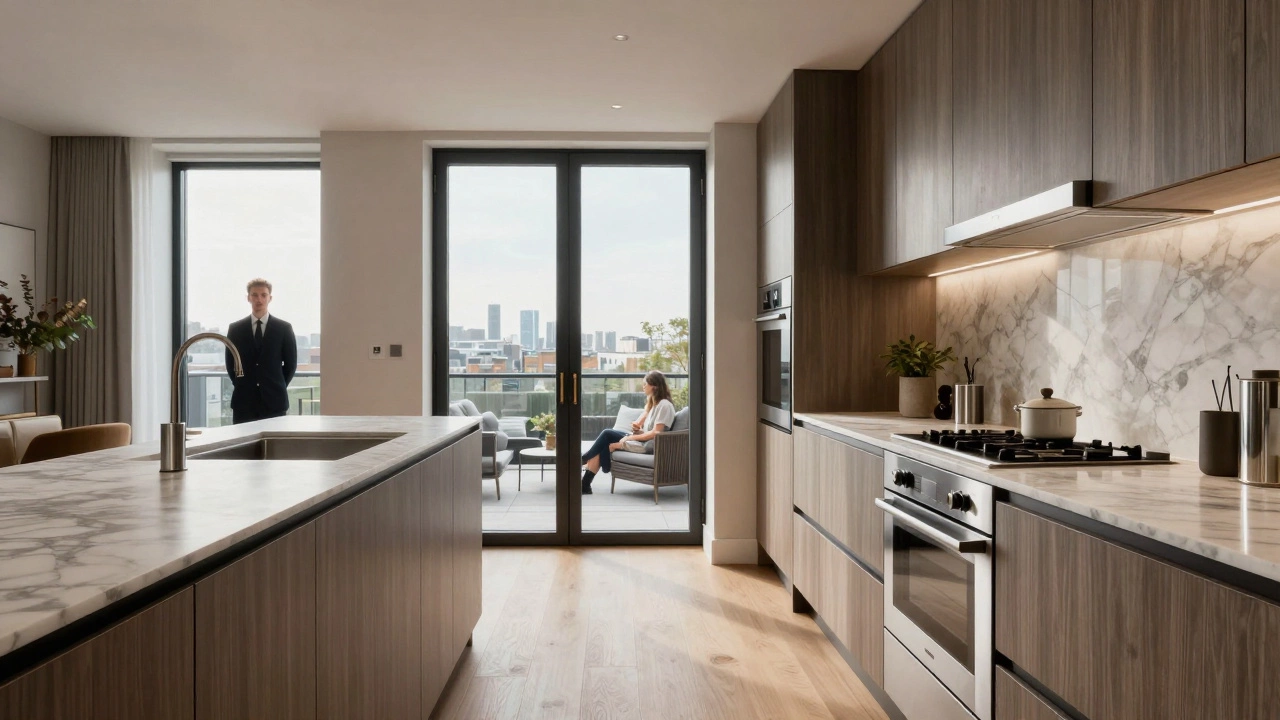
Premium apartments are the step up from standard units. You’re not buying a basic one-bedroom with beige walls and cheap laminate floors. You’re getting something better: upgraded materials, smarter layouts, and a few extra perks. Think hardwood floors instead of vinyl, stainless steel appliances instead of black plastic, and maybe a gym or rooftop terrace shared with a handful of other residents.
These units are often found in newer buildings or recently renovated older ones. Developers label them ‘premium’ to justify a 15-30% higher rent or sale price than the base model. In New York, a premium one-bedroom in a Midtown building might cost $4,200/month, while the standard version is $3,300. The difference? A better kitchen backsplash, noise-reducing windows, and a doorman who actually knows your name.
But here’s the catch: premium doesn’t mean exclusive. You’ll still share elevators with other residents. The concierge might handle packages but won’t book your dinner reservations. The spa? It’s a small room with a sauna and a hot tub-nothing like a full-service wellness center.
What Makes an Apartment Truly Luxury
Luxury apartments aren’t just upgraded-they’re reimagined. They’re designed for people who don’t just want comfort, but for whom comfort is a given. These aren’t just places to live. They’re private retreats with services that anticipate your needs before you voice them.
Think private elevator access. A 24/7 butler service. A chef who prepares meals in your kitchen on request. A spa with a steam room, cold plunge, and licensed massage therapists on staff. A wine cellar with curated selections and a sommelier who can pair your dinner with a bottle from your private collection.
In London, a luxury penthouse in Mayfair might come with a personal concierge team, a private screening room, and a dedicated parking valet who knows your car by sight. In Miami, a luxury unit could include a rooftop infinity pool with cabanas, a private chef’s kitchen, and a wellness consultant who designs your weekly fitness and nutrition plan.
Luxury apartments often have fewer units per floor-sometimes just one or two. That means more space, more privacy, and no shared hallways. The building itself is usually a landmark, designed by a renowned architect, with materials imported from Europe or Asia: Italian marble, custom bronze hardware, hand-laid mosaic tiles.
Price Difference: It’s Not Just a Number
Premium apartments typically cost 15-30% more than standard units. Luxury apartments? They cost 50-200% more than premium. That’s not just a price jump-it’s a different market entirely.
Take Chicago. A premium two-bedroom in the Gold Coast might rent for $5,500. A luxury equivalent in the same neighborhood? $12,000-$18,000. Why? Because luxury isn’t just about square footage. It’s about what comes with it: a personal assistant who handles your dry cleaning, travel bookings, and even your child’s tutoring schedule. It’s about a building that offers a private art curator to rotate pieces in your living room. It’s about having a security team that includes former federal agents.
Luxury apartments also come with hidden costs: mandatory service fees that can run $1,000-$3,000/month, covering everything from housekeeping to pet grooming. Premium units? You pay for the gym separately, if at all.

Who Are These Apartments For?
Premium apartments are for professionals who want more comfort without sacrificing practicality. You work hard. You want a nicer kitchen. You like having a doorman. You don’t need someone to fold your laundry.
Luxury apartments are for people who treat their home like a five-star hotel-except they never check out. These are entrepreneurs, heirs, global executives, and celebrities who value time more than money. They don’t want to spend their Saturday morning calling cleaners or arranging dog walkers. They want their home to run itself.
If you’re looking to impress clients with your address, luxury makes sense. If you just want to feel like you’ve upgraded your life without going all-in, premium is enough.
What You Won’t Find in Premium-But Will in Luxury
- Private entrances and dedicated elevators
- On-site sommeliers, chefs, or personal stylists
- Custom climate control per room, synced to your calendar
- Art consultants who curate your walls
- Security teams trained in executive protection
- Spa services that include acupuncture or cryotherapy
- Private rooftop gardens with herb gardens and outdoor kitchens
- Concierge teams that book last-minute theater tickets or arrange private jet charters
Premium apartments might have a fitness center. Luxury apartments have a full-time personal trainer on retainer.
Premium apartments have a doorman. Luxury apartments have a butler who knows your coffee order and your dog’s name.

Buying vs. Renting: Does It Matter?
Yes. If you’re renting, premium gives you a better experience without locking you into a 30-year mortgage. You can move after a year if your job relocates. Luxury rentals are rare and expensive-often reserved for short-term corporate stays or ultra-high-net-worth individuals who treat apartments like vacation homes.
If you’re buying, premium is a smart investment in a growing neighborhood. Luxury properties are more about lifestyle than ROI. They don’t always appreciate faster than premium ones. In fact, during market downturns, luxury units can sit longer on the market because there are fewer buyers.
But here’s the twist: luxury buyers aren’t looking for appreciation. They’re buying exclusivity. A penthouse in a building with only six units isn’t an asset-it’s a status symbol. And that’s worth more to them than any appraisal report.
Red Flags to Watch For
Some developers slap ‘luxury’ on a unit with marble countertops and call it done. That’s not luxury-that’s marketing. Real luxury is in the details you can’t see:
- Is the HVAC system quiet enough that you don’t hear it running at night?
- Do the windows have triple glazing to block city noise?
- Is the building’s wiring and plumbing up to code for high-end appliances?
- Are the service staff trained, or just dressed nicely?
- Does the concierge have real authority to make things happen, or are they just a front desk person with a fancy title?
Ask to speak to a current resident. Not the leasing agent. A real person who lives there. Ask them: ‘What’s the one thing you didn’t expect?’ If they say, ‘The butler showed up with my dry cleaning before I even asked,’ you’re looking at real luxury.
Final Thought: It’s Not About the Square Footage
People think luxury means bigger. It doesn’t. It means better. A 1,200-square-foot luxury apartment can feel more spacious than a 2,000-square-foot premium one because everything-from the lighting to the acoustics to the way the doors close-is designed to reduce friction in daily life.
Choose premium if you want comfort without the noise. Choose luxury if you want to live in a world where no detail is left to chance.
Are premium apartments worth the extra cost?
It depends on your lifestyle. If you value better materials, a nicer building, and a few extra perks like a gym or doorman, then yes. Premium apartments deliver noticeable upgrades without the steep price tag of luxury. But if you’re looking for services like personal concierge, private chefs, or 24/7 security, premium won’t cut it.
Can you rent a luxury apartment, or are they only for sale?
You can rent luxury apartments, but they’re rare and expensive. Most are leased by high-net-worth individuals, corporate executives on relocation, or celebrities. Monthly rents can exceed $15,000, and you’ll often pay an additional $1,000-$3,000 in service fees. Rentals are more common in cities like New York, London, and Miami, but availability is limited.
Do luxury apartments appreciate faster than premium ones?
Not necessarily. Premium apartments in up-and-coming neighborhoods often see higher appreciation because they attract more buyers. Luxury units, by contrast, have a smaller buyer pool. Their value comes from exclusivity, not market demand. In a downturn, luxury units can sit longer on the market. They’re bought for lifestyle, not investment.
What’s the biggest mistake people make when choosing between premium and luxury?
They assume luxury is just more square footage or nicer finishes. The real difference is in the services and the level of personalization. A luxury apartment doesn’t just have a gym-it has a personal trainer on call. It doesn’t just have a doorman-it has a butler who knows your schedule. If you don’t need those services, you’re paying for them anyway.
How can I tell if a luxury apartment is truly luxury or just marketed that way?
Look for details you can’t see: soundproofing, HVAC quality, wiring for smart systems, and the training of staff. Ask to speak to a current resident-not the leasing agent. Ask them: ‘What’s the one thing you didn’t expect?’ If they mention a service that anticipates their needs before they ask, you’re looking at real luxury. If they just mention marble countertops, you’re looking at marketing.